

Calcium-Rich Foods for Babies Starting Solids
Your baby doesn't need a bowlful of calcium-rich food at their first meal. When you're starting solids, a few soft bites are enough for them to explore a new taste and texture. Milk feeds still do the heavy lifting during the first year, while foods such as plain yogurt and calcium-set tofu add variety.
The useful question is how to serve those foods safely, in a form your baby can manage. Start with readiness, then choose simple ingredients you can prepare at home.
Start with milk feeds and your baby's readiness
Most babies begin solids around 6 months, when they can hold their head steady and sit upright with support. Interest in your food is another clue. If you're unsure whether your baby is ready, ask their pediatrician rather than relying on age alone.
Breast milk or infant formula remains the primary source of nutrition throughout the first year. Solids add nutrients and eating practice, but early spoonfuls shouldn't replace regular milk feeds. Follow your baby's cues: an open mouth may mean they're interested, while turning away often means they're finished.
Cow's milk can be an ingredient in food before the first birthday, but it should not be your baby's drink before 12 months.
Calcium matters for growing bones and teeth, yet there's no need to calculate the mineral in every bite. Offer a range of foods over time, with regular attention to iron-rich choices such as meat, lentils, beans, and iron-fortified infant cereal.
Dairy options among calcium-rich foods for babies
Dairy offers two practical first foods: yogurt and cheese. Choose pasteurized products, and introduce dairy as a new allergen when you can watch for a reaction.
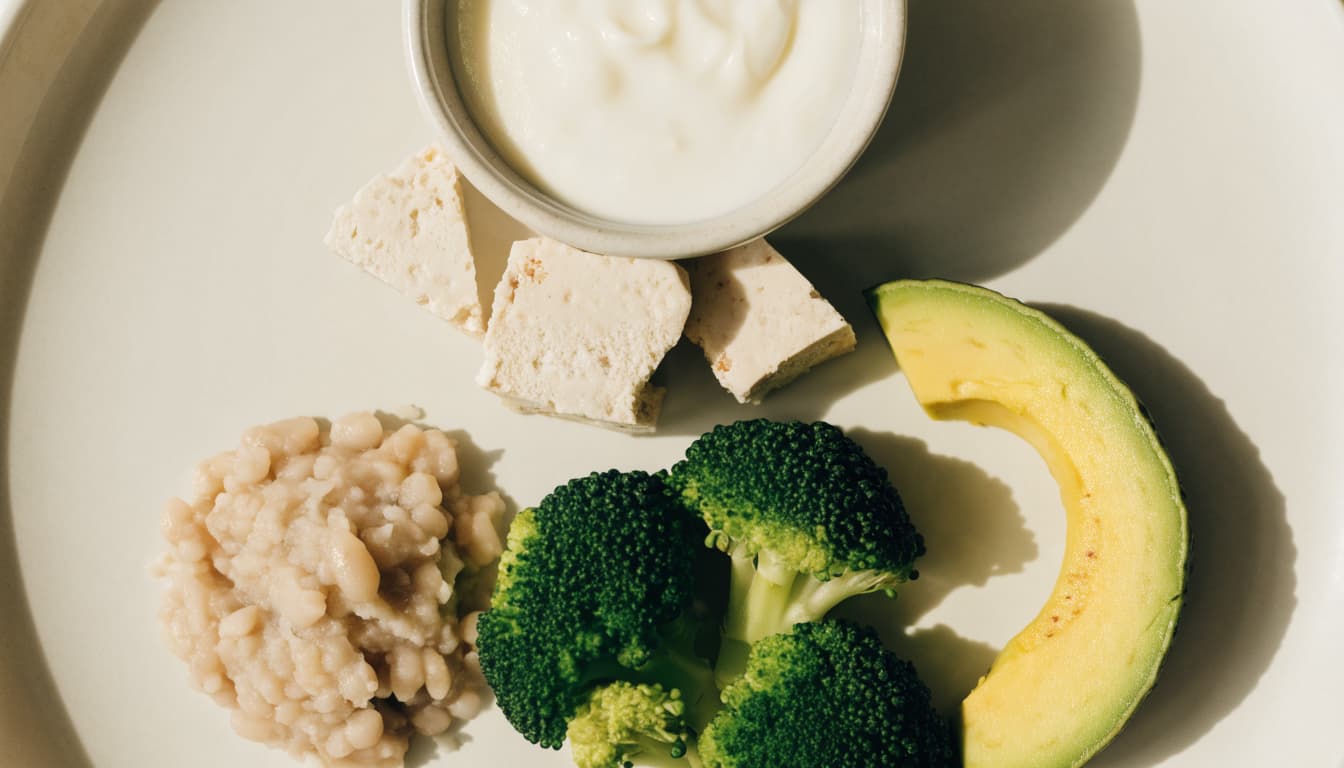
Offer plain, whole-milk yogurt by spoon
Unsweetened, pasteurized whole-milk yogurt is smooth enough for an early eater and provides calcium. Serve a little on a spoon, or let your baby bring a preloaded spoon to their mouth. If the texture is too thick, stir in a small amount of breast milk or prepared formula.
Check the ingredient list rather than choosing a flavored cup. Babies don't need added sugar, and yogurt sweetened with honey is unsafe before 12 months because honey can cause infant botulism. Once your baby has tried fruit separately, mashed ripe pear or banana can add sweetness.
Make cheese soft and easy to manage
Pasteurized cheese also contains calcium, but firm cubes can be difficult for a beginner to handle. Finely grate a small amount into warm mashed vegetables, or use a soft, spreadable pasteurized cheese in a thin layer. Check labels and use salty cheeses sparingly.
Cheese works best as part of a meal rather than the whole meal. For example, mix a little grated cheese into soft, unsalted broccoli or mashed beans. Keep the finished texture moist and free of firm clumps.
Try calcium-set tofu and well-cooked beans
Plant foods can bring calcium to the tray, although amounts vary considerably. A food's preparation and ingredient label tell you more than its name alone.
Check tofu's setting ingredient
Tofu made with calcium sulfate can contain substantial calcium. Other tofu may provide much less, so look for calcium sulfate on the package and compare nutrition labels when available. Choose plain tofu rather than a salty, seasoned version.
Silken tofu can be mashed smooth and offered by spoon. For a baby managing thicker foods, mash soft firm tofu with avocado or a little water. Tofu contains soy, a common allergen, so introduce it thoughtfully if soy is new to your baby.
Cook beans until they mash easily
White beans and chickpeas contribute some calcium, along with other nutrients. Their calcium content isn't a reason to choose them over yogurt or calcium-set tofu, but they fit naturally into varied meals. Beans and lentils can also help you offer iron-rich foods regularly.
Cook dried beans thoroughly, or choose no-salt-added canned beans and rinse them. Mash until no whole beans remain for a beginning eater; loosen the mixture with water, breast milk, or prepared formula. As your baby becomes comfortable with texture, leave the mash slightly thicker.
Add cooked greens and sesame in baby-safe forms
Vegetables can contribute calcium, though most baby-sized portions supply less than yogurt or calcium-set tofu. They're still worth serving for their flavors and other nutrients.
Soften broccoli, kale, and bok choy
Steam broccoli until the stems squash easily between your fingers, then mash it or offer a suitably soft piece to a baby ready for finger foods. Cook kale or bok choy until tender, remove tough stems, and chop or blend the leaves into a familiar mash.
Don't count on spinach as a main calcium source. It contains calcium, but its oxalates limit how much the body absorbs. Rotate greens instead of relying on one vegetable to meet a nutritional goal.
Thin tahini rather than serving a sticky spoonful
Tahini, a paste made from sesame seeds, offers another way to include calcium. Stir a small amount thoroughly into smooth chickpeas or yogurt so it isn't thick or sticky. Sesame is a common allergen, and the calcium in a small serving won't replace milk feeds or other calcium-containing foods.
Whole seeds can be hard for a new eater to manage. If you use seeds, choose finely ground forms mixed evenly into a moist food, and match the texture to your baby's skills.
Match the texture to the baby, not just the food
Even a nutritious ingredient needs preparation that fits the child eating it. Start with a smooth puree or soft mash if that's what your baby handles well. Then gradually offer thicker mashes and soft pieces as their skills develop.
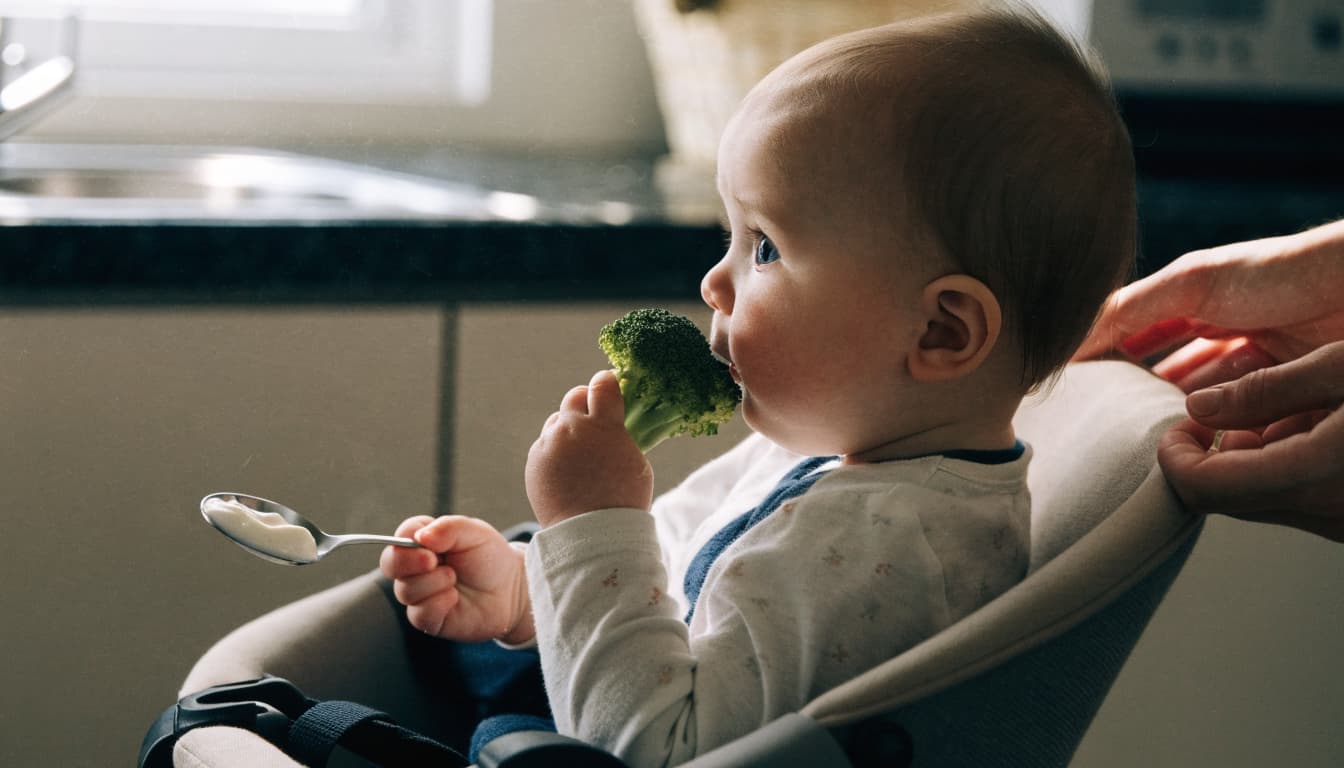
Check softness and shape before serving
A cooked vegetable should give easily when pressed. Mash whole beans, remove tough skins and strings, and break up dense lumps that might be difficult to move around the mouth. If you offer finger foods, choose pieces your baby can manage at their current stage.
Keep whole nuts, popcorn, hard raw vegetables, whole grapes, firm cheese chunks, and thick spoonfuls of nut butter off the baby tray. Round foods need shape changes, while hard foods need cooking or another appropriate preparation. Never assume that a small piece is automatically safe.
Stay close through the entire meal
Seat your baby upright in a stable high chair and stay within arm's reach. Avoid feeding in a reclined stroller, car seat, or moving vehicle, even when the food is a smooth puree.
Gagging can be noisy as babies learn to handle food. Choking may be quiet because air cannot pass. Learn infant choking first aid before finger foods become routine, and seek immediate help if your baby cannot breathe, cough, or cry.
Introduce dairy, soy, and sesame with care
Several calcium-containing foods in this guide are common allergens. Dairy, soy, and sesame can be offered once your baby is developmentally ready for solids. Other common allergens include egg, peanut, wheat, tree nuts, fish, and shellfish. There's generally no reason to delay them by default.
Offer a small amount of one new allergen at a time, earlier in the day when your baby is well and you can observe them. Use a safe texture, such as plain yogurt or smooth tofu mash. If your baby tolerates a food, keep offering it regularly in age-appropriate forms.
Watch for hives, facial swelling, repeated vomiting, coughing, or wheezing after a new food. Stop serving it and contact your child's clinician if a reaction occurs. Trouble breathing, tongue swelling, or a pale, limp appearance calls for emergency care.
If your baby has severe eczema, a known food allergy, or a previous reaction, speak with their pediatrician before introducing allergens. Ask for individual advice about feeding skills or growth concerns, too.
Build simple meals at home and away
A calcium-containing food doesn't need its own special recipe. Once your baby has tried the ingredients separately, you can combine familiar foods into small meals and adjust the texture as needed.
Pair calcium foods with iron-rich choices
Stir calcium-set tofu into mashed lentils, add a little grated cheese to soft beans, or serve yogurt beside iron-fortified infant cereal. Keep seasonings mild and skip added salt. These combinations offer more variety than trying to make every spoonful about calcium.
You can also use family food. Set aside a portion of plain, well-cooked vegetables or beans before adding salt or a spicy sauce. Check it for hard pieces, then mash or soften it to match your baby's eating skills.
Pack familiar foods for an outing
For a trip, choose foods your baby has already tolerated rather than introducing a new allergen at a park or restaurant. Pack perishables such as yogurt or tofu in a cooler with an ice pack. Bring a clean spoon and bowl, and discard food left in a bowl your baby has eaten from.
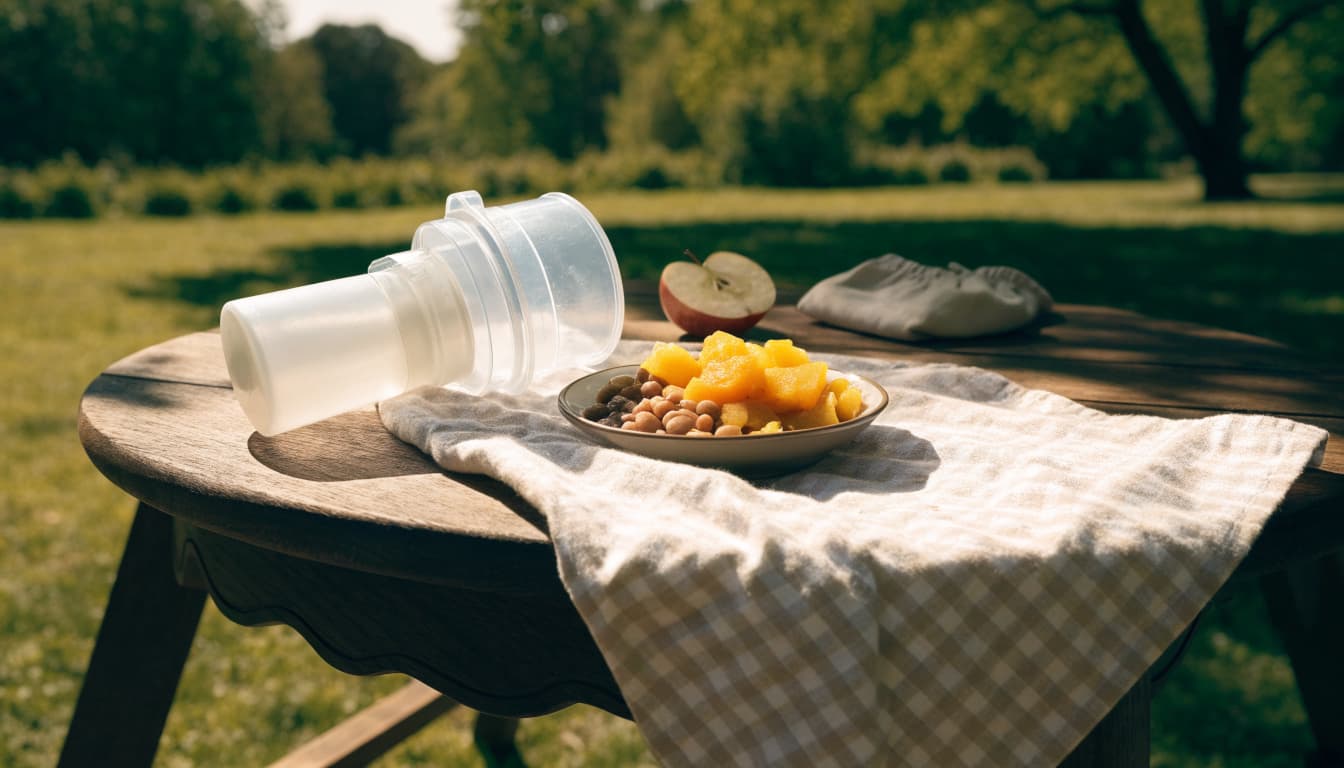
A soft, unsalted portion of the family meal can also work away from home when you can prepare it safely. Wherever you eat, make time for an upright, supervised meal rather than offering bites on the move.
Key takeaways for first bites
- Breast milk or infant formula remains your baby's main nutrition through the first year; cow's milk waits until 12 months as a drink.
- Plain pasteurized yogurt and calcium-set tofu are useful options. Beans, cooked greens, and tahini add variety, but calcium amounts differ.
- Soft texture, upright seating, and close supervision matter at every meal.
- Introduce new allergens in safe forms when you can observe your baby, and ask your pediatrician about individual concerns.
Frequently asked questions
Can a 6-month-old eat yogurt instead of drinking cow's milk?
A baby who is ready for solids can generally try a small amount of plain, pasteurized whole-milk yogurt. That doesn't make yogurt a replacement for breast milk or infant formula. Cow's milk should not be offered as a drink before 12 months. Since dairy is an allergen, watch your baby when introducing it.
Is broccoli enough calcium for a baby?
Broccoli contributes some calcium, but a small serving isn't a dependable way to meet all your baby's needs. Keep milk feeds central and offer variety. Yogurt or calcium-set tofu may provide more calcium, while broccoli brings a new flavor and texture to the meal.
What if my baby refuses these foods?
A refusal at one meal doesn't mean the food is off the menu. Offer a small amount another day without pressure, perhaps beside something familiar. Your baby's pediatrician can help if feeding remains difficult, your baby coughs or struggles while eating, or you're worried about growth.
Keep first foods simple
The most useful calcium-rich foods for babies are the ones you can serve safely and offer again. Start with milk feeds as the foundation, then try soft foods such as plain yogurt, calcium-set tofu, and well-cooked vegetables. Texture and supervision matter as much as the ingredient.
Fresh food can fit outings, too. The hand-powered Wonder Wean helps you turn suitable soft foods into a texture your baby can manage without needing electricity. If that would make feeding away from home easier, you can Buy Now and keep offering familiar, healthy foods wherever the day takes you.