

How to Build Balanced Baby Meals With Whole Foods
A baby's meal doesn't need a complicated recipe to provide variety. Balanced baby meals can come from a few soft, familiar foods prepared in a texture your child can manage.
Breast milk or infant formula remains central during the first year, while solids gradually add new flavors, textures, iron-rich foods, and energy. Once your baby shows signs of readiness, use a simple plate-building method that works at home, in a restaurant, or during a busy day out.
Key Takeaways
- Build meals from soft produce, an iron-rich or protein food, and an energy-dense ingredient when they suit your baby's stage.
- Start solids when your baby can sit upright with support, control their head, open their mouth for food, and swallow instead of pushing food out.
- Keep breast milk or formula as your baby's main source of milk and nutrition during the first year.
- Match every ingredient to your baby's current texture skills. Cook, mash, shred, or thin foods as needed.
- Keep your baby upright and within arm's reach during meals.
- Chill prepared food during travel, use clean serving tools, and discard food that has touched your baby's mouth.
- Ask your pediatrician about feeding concerns, allergies, premature birth, swallowing problems, or medical conditions.
What Balanced Baby Meals Need
A balanced plate for a baby doesn't have to include a large number of ingredients. Two or three suitable foods can offer variety while keeping the meal manageable.
The goal is to include different types of food across the day. Each meal doesn't need to provide every nutrient. Instead, offer familiar foods regularly and add new ingredients gradually.
Start with a soft fruit or vegetable
Soft produce can add flavor, moisture, and variety. Ripe banana, avocado, pear, sweet potato, and well-cooked vegetables are practical choices because they mash easily.
Cook firmer produce until it breaks apart easily between your fingers. Remove pits, tough skins, stems, and hard pieces before serving. A food that feels soft to an adult may still be difficult for a new eater, so check the texture yourself before offering it.
Add an iron-rich or protein food
Once solids begin, iron-rich foods deserve a regular place in your baby's meals. Suitable options can include tender meat, fully cooked egg, soft beans, lentils, peas, and iron-fortified infant cereal.
Mash beans and lentils until they have a smooth or soft texture. Remove bones, skin, and tough pieces from meat, then finely mince or mash it with a moist food. Fully cook eggs and serve them in a form your baby can manage.
Include an energy-dense food when appropriate
Avocado, plain full-fat yogurt, oats, and smooth nut butter prepared in a safe form can make a small meal more satisfying. These foods also help create different textures without relying on added sugar or heavily processed snacks.
For a new allergen, use a safe texture and introduce one new allergenic food at a time. Ask your pediatrician for personalized guidance, especially if your baby has severe eczema, an existing allergy, or a previous reaction.
Begin With Readiness, Not a Perfect Schedule
Most babies begin complementary foods at about 6 months, although readiness varies. The CDC advises against starting solids before 4 months. Your baby's development matters more than a calendar date.
Breast milk or infant formula remains your baby's main source of milk and nutrition until about 12 months. Solids complement regular milk feeds rather than replacing them at the beginning.
Look for several readiness cues
Your baby may be ready when they can sit upright with support and keep their head steady. They may also open their mouth when food approaches, bring objects to their mouth, and swallow food instead of pushing it out with their tongue.
Interest in your dinner alone doesn't prove readiness. A baby needs enough postural control to eat safely and enough mouth control to move food around.
Start when your baby is rested and mildly hungry. Appetite will change from one meal to the next, so let your baby decide how much to eat. Turning away, closing their mouth, or losing interest usually means the meal is finished.
Keep milk feeds at the center
Continue breastfeeding or offering formula according to your baby's usual routine. A few tastes of food may be enough during the early weeks.
If your baby was born prematurely, has trouble swallowing, or has a condition that affects feeding, ask your pediatrician or a feeding specialist for individual advice. The right texture and pace may differ from general guidance.
Match Texture to Your Baby's Skills
Balanced ingredients only help when your baby can eat them safely. Texture should change gradually as your baby gains experience.
A new eater may need a smooth puree or thin mash. With practice, many babies move toward thicker mashed foods, soft pieces they can pick up, and tender foods that break apart easily.
Soften, mash, shred, or thin foods
Use a fork, spoon, sieve, or hand-powered food maker to adjust texture. Add breast milk, formula, water, plain yogurt, or a soft vegetable when a food needs more moisture, provided the combination suits your baby.
Cook carrots, green beans, apples, broccoli, and other firm produce until soft. Finely shred tender meat and check carefully for bones. Spread nut butter thinly or mix a small amount into yogurt, cereal, or porridge. Never offer a sticky spoonful of nut butter by itself.
Supervise every bite
Seat your baby upright during meals and stay within arm's reach. Gagging can be loud while a baby learns to manage food. Choking may be quiet because the airway is blocked, so caregivers should learn infant choking first aid and CPR from a certified course.
Avoid whole nuts, popcorn, hard raw vegetables, hard candy, marshmallows, whole grapes, and dense chunks. Quarter grapes and cherry tomatoes lengthwise, then check that they're soft enough for your baby's stage.
Food should also be cool enough to eat. Stir mashed food thoroughly and check for hot spots before serving.
Simple Whole-Food Combinations to Try
The following combinations show how to think about balanced baby meals without turning every feeding into a recipe project. Use only foods your baby has already tolerated when possible, and adjust each texture to their current skills.
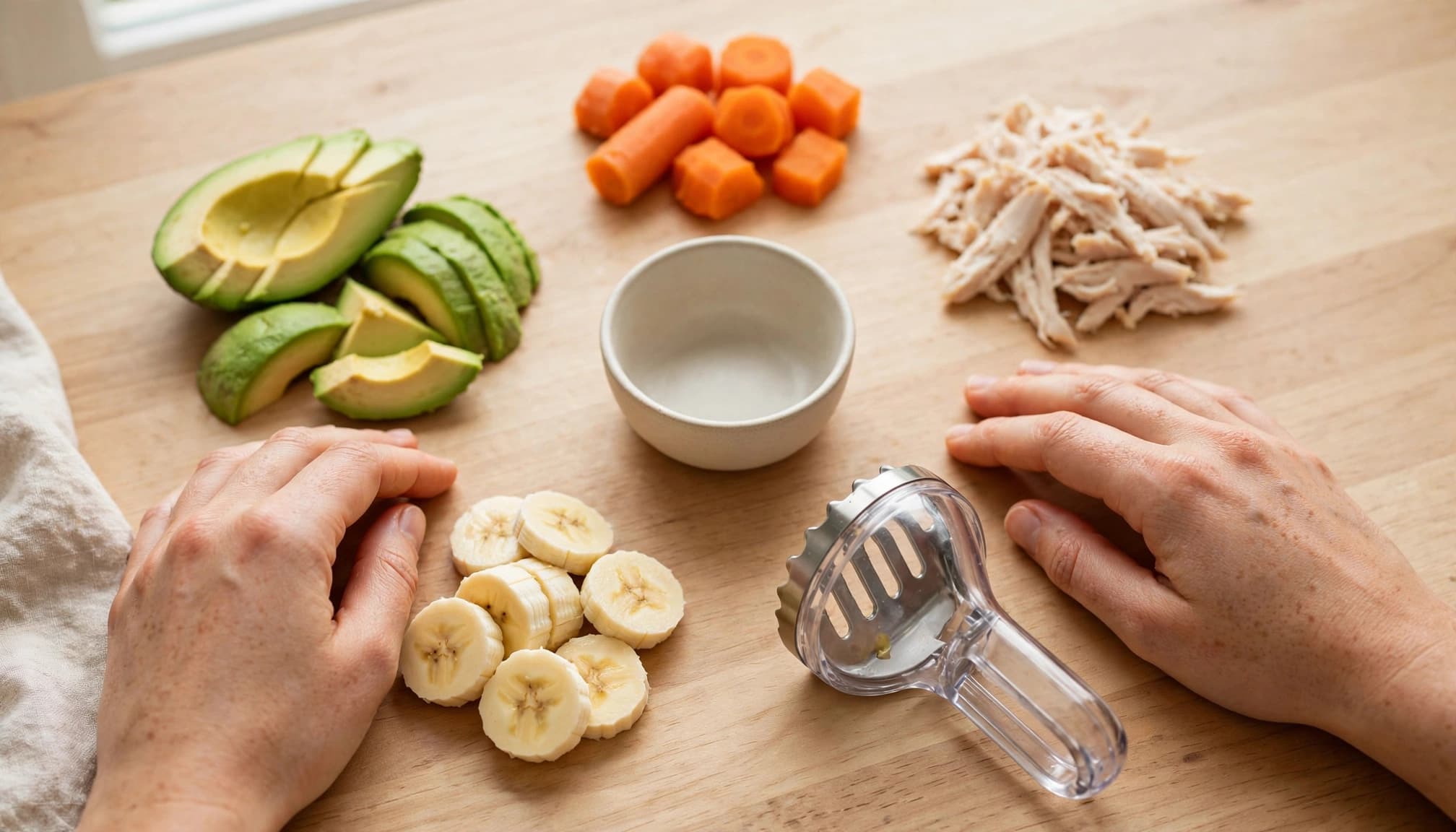
Avocado, carrot, chicken, and banana
Ripe avocado offers a naturally soft texture. Steamed carrot adds a different flavor, while tender chicken can provide an iron-rich protein option. Banana can add sweetness and moisture.
These ingredients don't need to appear in one bowl. You can offer two together and serve the others at different meals. If you combine them, mash or finely shred each component so no hard pieces remain.
Chicken should be fully cooked, moist, and free from skin, bones, and tough sections. Carrot should be soft enough to mash easily with the back of a spoon.
Pear, soft vegetables, and beans
A ripe pear can be mashed when its flesh is soft, while cooked vegetables add variety. Soft beans or lentils can provide another plant-based option when they are thoroughly cooked and mashed.
Remove pear seeds and tough skin if needed. Mash beans until their skins and larger pieces no longer create a choking concern for your baby's stage.
Keep meals familiar when introducing a new food. Pairing one new ingredient with a food your baby already enjoys can make the experience calmer and easier to observe.
Make Fresh Baby Food at Home or Away
Fresh feeding doesn't require a full kitchen. A ripe banana, avocado, soft pear, or properly cooked vegetable can become a meal with a fork or compact hand-powered tool.
Prepare cooked food at home, divide it into clean containers, and keep one portion chilled for an outing. Use an insulated bag with ice packs for perishable food. Keep the container cold until mealtime, and prepare only the amount your baby is likely to eat.
Pack a small feeding kit
A practical kit can include:
- A lidded bowl and small baby spoon
- A clean spare spoon
- A washable bib and cloths
- Hand wipes or sanitizer for adults
- A sealable bag for used utensils and food scraps
- Ice packs for chilled containers
- A compact hand-powered food maker
Wash your hands with soap and water before preparing food whenever possible. Clean the bowl, spoon, and food tool after use. Keep used utensils separate from untouched food.
At a restaurant or family gathering, look for plain, fully cooked options such as avocado, steamed vegetables, plain rice, a baked potato, soft beans, or an unsalted egg. Avoid sauces, salty sides, hard pieces, and food that has been sitting out.
Prepare a portion when your baby is ready
The Wonder Wean is a compact, hand-powered pocket blender that can mash soft or properly cooked ingredients without electricity. It can help you prepare a small portion at a park, restaurant, hotel, or family visit.
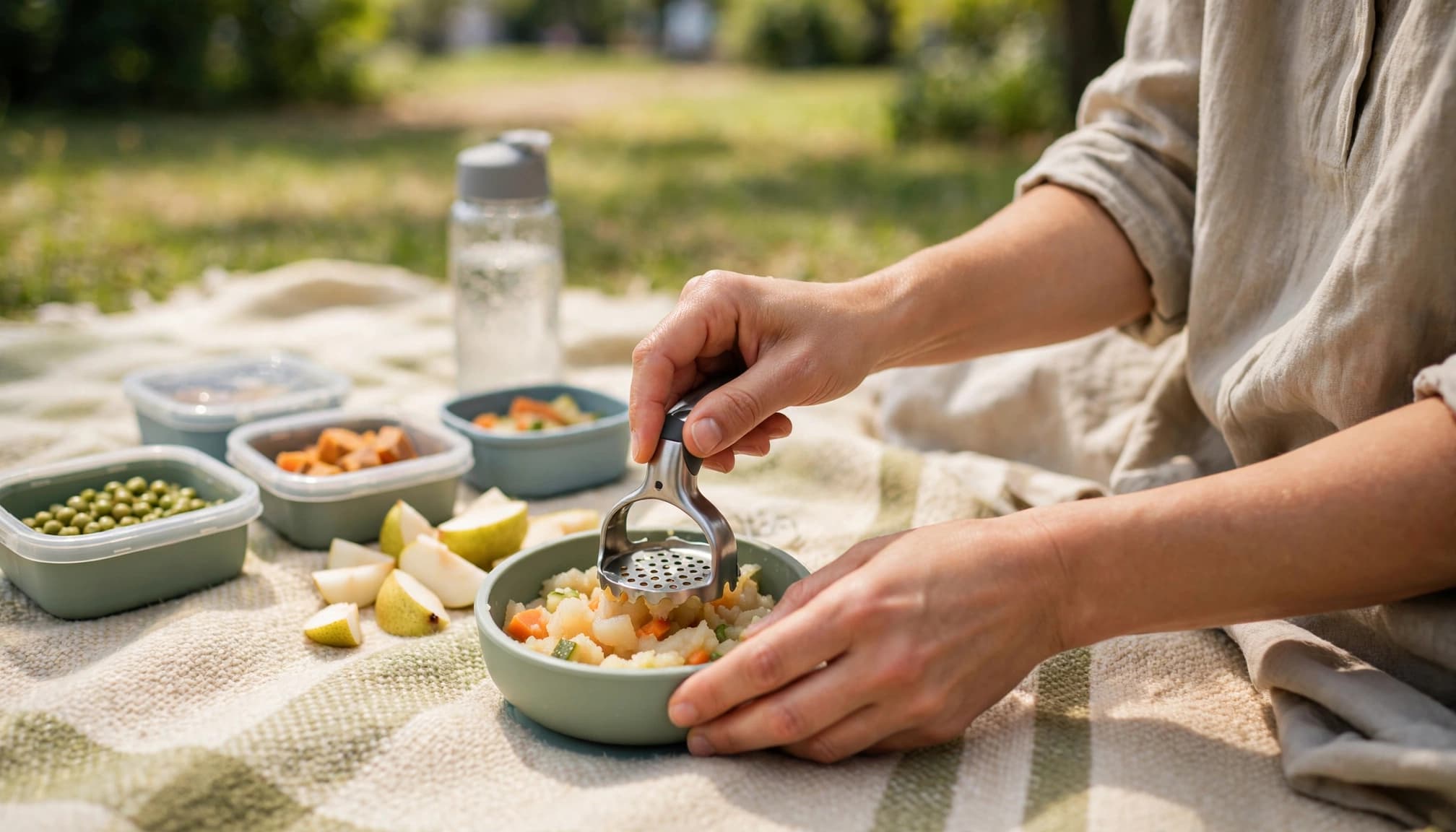
Keep whole bananas, avocados, and pears intact until you need them. Cut produce close to serving time, and place prepared food in the cooler promptly. Refrigerate prepared food within two hours, sooner in hot conditions, and discard leftovers that touched your baby's mouth.
If a compact option fits your family's routine, you can Buy Now and keep fresh-food preparation within reach during errands and travel.
Questions Parents Often Ask
Can breast milk or formula be replaced by solids?
No. Breast milk or infant formula remains important during the first year. Solids gradually complement milk feeds by introducing flavors, textures, and foods such as iron-rich meats, beans, lentils, eggs, and fortified cereal.
Your baby's pediatrician can help you adjust feeding plans if growth, milk intake, allergies, or digestion raises concerns.
How many foods should a baby meal include?
A meal can be simple. Two or three suitable foods are enough to offer variety, especially when your baby is new to solids.
Focus on safe texture and regular exposure rather than making every plate look complete. You can offer produce at one meal and an iron-rich food at another.
When should common allergens be introduced?
Common allergens can usually be introduced once your baby is developmentally ready for solids. Use safe forms, such as smooth peanut butter thinned into yogurt or cereal, fully cooked egg, or plain yogurt when dairy is appropriate.
Introduce one new allergenic food at a time so it's easier to identify a reaction. Watch for hives, facial swelling, repeated vomiting, coughing, wheezing, or unusual sleepiness. Seek urgent medical help for breathing trouble, tongue swelling, or severe symptoms.
Ask your pediatrician before introducing allergens if your baby has severe eczema, an existing food allergy, or a previous reaction.
What should I do if my baby refuses a food?
Keep the experience calm and avoid forcing bites. Babies often need repeated exposure before accepting a new flavor or texture.
Offer the food again alongside something familiar on another day. If refusal continues across many foods, or your baby coughs, chokes, struggles with textures, or has trouble gaining weight, contact your pediatrician.
Conclusion
Balanced baby meals can come from ordinary foods prepared with care. Offer soft produce, iron-rich or protein foods, and suitable energy-dense ingredients while keeping breast milk or formula central during the first year.
Readiness, texture, supervision, and food safety matter more than complicated recipes. With a small bowl, clean spoon, chilled storage, and the Wonder Wean, you can mash healthy foods for your baby even when you're away from the kitchen.