

How to Add Variety to Your Baby's Whole-Food Diet
A baby's food preferences begin taking shape long before the toddler years. Offering many safe tastes and textures now can make family meals feel less stressful later.
A baby whole food diet doesn't need rare ingredients or elaborate recipes. Soft fruits, vegetables, beans, eggs, fish, grains, and tender meats offer plenty of possibilities when you introduce them at the right pace. Start with readiness, then build variety one manageable meal at a time.
Start With Feeding Readiness, Not a Calendar Date
Most babies begin complementary foods around 6 months, but developmental signs matter more than a date circled on the calendar. Your baby should sit with good head and neck control, show interest in food, and move food from a spoon toward the back of the mouth rather than pushing it out.
Milk remains the primary source of nutrition through the first year. Breast milk or infant formula still fills most of your baby's nutritional needs while solid foods become familiar.
Match the texture to your baby's skills
Early foods can be smooth, thick purees or very soft mashed foods. As your baby gets more comfortable, move toward lumpy mashes, finely chopped foods, and soft finger foods that flatten easily between your fingers.
For example, mash ripe avocado with a fork at first. Later, offer a thick avocado wedge coated in finely ground oats or hemp seeds for grip. This gradual change helps babies practice chewing and handling food.
Keep meals calm and responsive
Sit with your baby during meals and watch for hunger and fullness cues. Leaning forward, opening the mouth, or reaching for food may mean they want more. Turning away, clamping the mouth, or swiping food away often means they are finished.
Avoid pressure to take another bite. A baby who feels in control is more likely to approach unfamiliar foods with curiosity over time.
Repeated exposure matters more than a spotless plate. A rejected food can become familiar after several relaxed offers.
How to Build a Baby Whole Food Diet With More Variety
Variety isn't about giving a different food at every meal. It means regularly rotating food groups, colors, flavors, and textures across the week. This gives your baby practice with a broad range of tastes while keeping planning realistic.
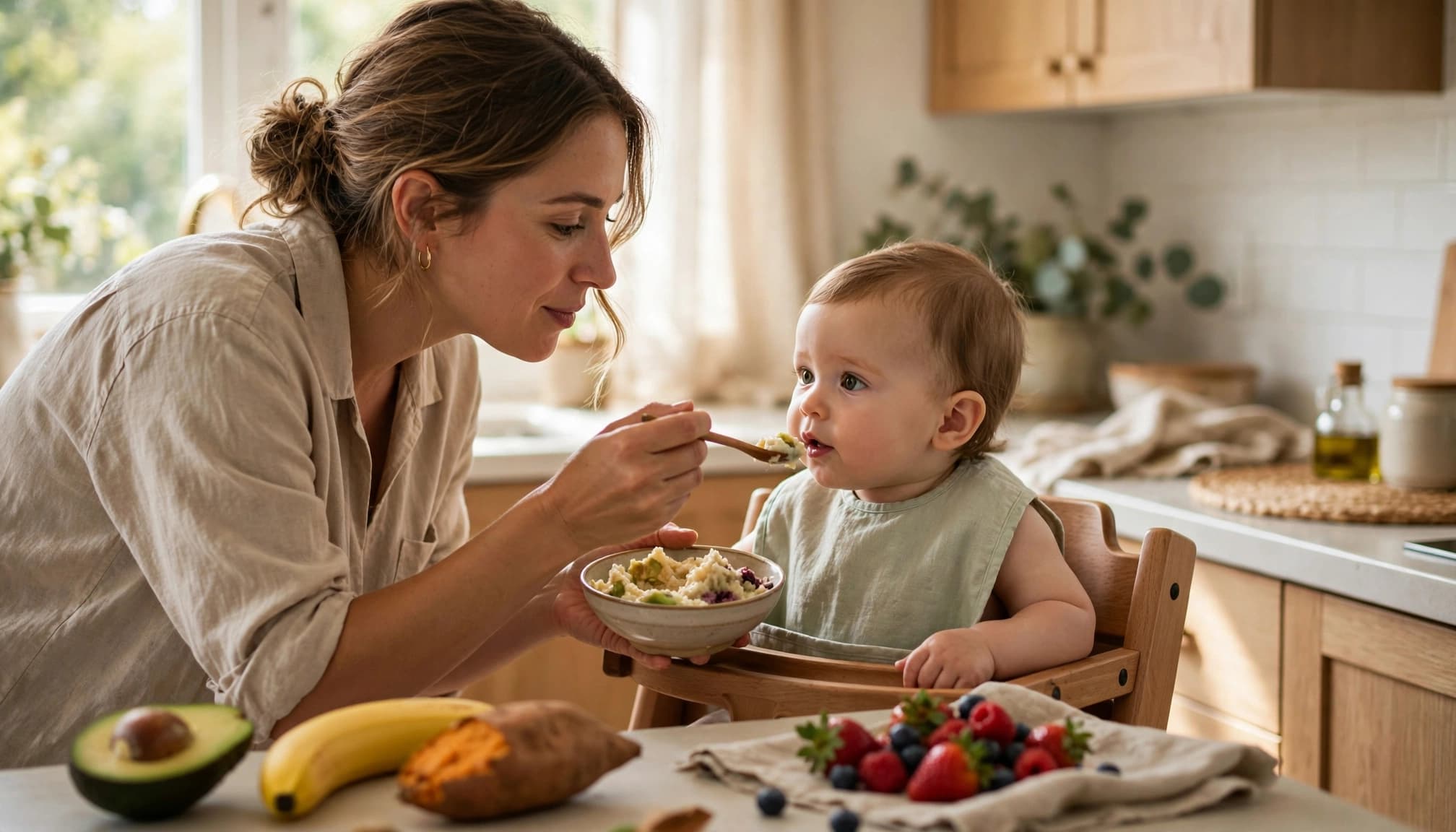
Rotate colors, not complicated recipes
A colorful produce drawer makes variety easier to see. Offer orange sweet potato one day, green peas the next, then purple sweet potato, ripe pear, or cooked beets later that week.
Each food brings its own taste and nutrients. Bitter greens, earthy lentils, tangy yogurt, and mild squash all count. Babies don't need every meal to be sweet.
Include iron-rich foods every day
Around 6 months, babies need reliable food sources of iron because the iron stores they were born with begin to decline. Meat, poultry, fish, eggs, beans, lentils, tofu, and iron-fortified infant cereal can all fit into meals.
Pair plant-based iron foods with vitamin C-rich produce when possible. Lentils with mashed tomato, beans with soft mango, or oatmeal with berries are easy combinations. Vitamin C helps the body absorb non-heme iron from plant foods.
This simple rotation can help you plan a wider baby whole food diet:
| Food group | Easy first options | Later texture idea |
|---|---|---|
| Fruits and vegetables | Banana, squash, peas, pear | Soft wedges or small tender pieces |
| Protein and iron foods | Lentils, egg, shredded chicken | Thick mash or finely chopped pieces |
| Grains and starches | Oats, potato, quinoa, pasta | Soft clumps or short pasta pieces |
| Healthy fats | Avocado, yogurt, olive oil, thin nut butter | Mixed into meals or spread thinly |
A useful goal is to rotate ingredients, not to chase perfection. Two familiar foods beside one less familiar food often feels manageable for both of you.
Introduce New Foods Safely and Without Pressure
New foods can bring excitement and worry, especially when an ingredient is a common allergen. The safest approach is calm, prepared, and age-appropriate.
Bring in common allergens early
Current feeding guidance supports introducing common allergenic foods when a baby is ready for solids, rather than delaying them without a medical reason. Common allergens include peanut, egg, dairy, wheat, soy, sesame, fish, shellfish, and tree nuts.
Offer one new allergen early in the day, when you can observe your baby. Use safe forms, such as smooth peanut butter thinned with warm water or breast milk, well-cooked egg, plain yogurt, or finely flaked fish with bones removed.
If your baby has severe eczema, an existing food allergy, or a sibling with a serious allergy, speak with your pediatrician before introducing peanut and other allergens. Seek urgent medical care for breathing trouble, repetitive vomiting, widespread hives, facial swelling, or unusual lethargy after eating.
Expect a learning curve
Babies may grimace at broccoli, lentils, or fish because the flavor is unfamiliar. That face does not always mean dislike. Offer the food again another day without disguising it under fruit.
Try changing the format before giving up. A baby may refuse mashed peas yet enjoy peas blended into a potato mash or pressed onto a pre-loaded spoon. Familiarity grows through low-pressure repetition.
Keep portions small. A teaspoon of a new food is enough for practice, and it reduces waste when your baby isn't interested.
Use Flavor Combinations That Still Taste Like Food
Plain food is fine, yet babies can enjoy gentle flavor combinations. Combining ingredients also helps you serve balanced meals without opening several separate containers.
Make simple pairings
Start with two ingredients your baby already knows. Stir olive oil into sweet potato, add cinnamon to oatmeal, or mix plain full-fat yogurt with mashed peach. Soft cooked apples pair well with lentils, while avocado can soften shredded chicken or flaked salmon.
Use herbs and mild spices without salt. Cinnamon, cumin, basil, dill, ginger, garlic, and oregano add flavor to family foods. Skip added sugar, and avoid honey before 12 months because it can contain spores that cause infant botulism.
Adapt the family meal before seasoning
Set aside your baby's portion before adding salt, sugar, or spicy sauces. Then mash, shred, or finely chop it into a safe texture.
Taco night can become soft black beans, avocado, tomato, and shredded chicken. Pasta night can become tiny soft pasta pieces with unsalted sauce and tender zucchini. This approach makes the baby whole food diet part of family life instead of a separate cooking project.
Watch choking hazards closely. Whole nuts, popcorn, hard raw vegetables, chunks of apple, hard candy, and whole grapes are not safe for babies. Cook firm produce until soft, grate it when needed, and cut grapes and cherry tomatoes lengthwise into quarters.
Make Variety Easier During a Busy Week
A wider menu is much easier when your refrigerator holds flexible building blocks. You don't need a freezer full of individual cubes to feed your baby well.
Prep ingredients, then mix and match
Cook a few components once or twice a week. Roast a tray of squash, steam broccoli and carrots until soft, cook lentils, and keep ripe fruit on hand. At mealtime, combine two or three pieces based on what your baby has eaten recently.
A short rotation might include:
- Oatmeal with mashed banana and thin peanut butter for breakfast.
- Lentils with soft carrots and olive oil for lunch.
- Mashed potato with flaked salmon and peas for dinner.
- Plain yogurt with softened berries as a snack for babies who are ready for snacks.
This method avoids serving the same puree for several days because you made a large batch. It also lets you use what the rest of the household is already eating.
Keep a simple food record
A notes app or paper list can help you remember what your baby has tried. Write down new allergens, foods your baby liked, and any reactions you need to discuss with a clinician.
The list isn't a scorecard. It is a practical memory aid on a tired Tuesday when every meal idea seems to disappear. Seeing 20 or 30 foods on the page can also show that your baby's diet is more varied than it feels.
Bring Whole Foods Along When You Leave Home
Errands, restaurant meals, park mornings, and travel can interrupt routines. Still, those moments often offer easy whole-food options. A ripe banana, avocado, soft cooked vegetables, plain yogurt, oatmeal, beans, or tender fish can work when prepared safely.
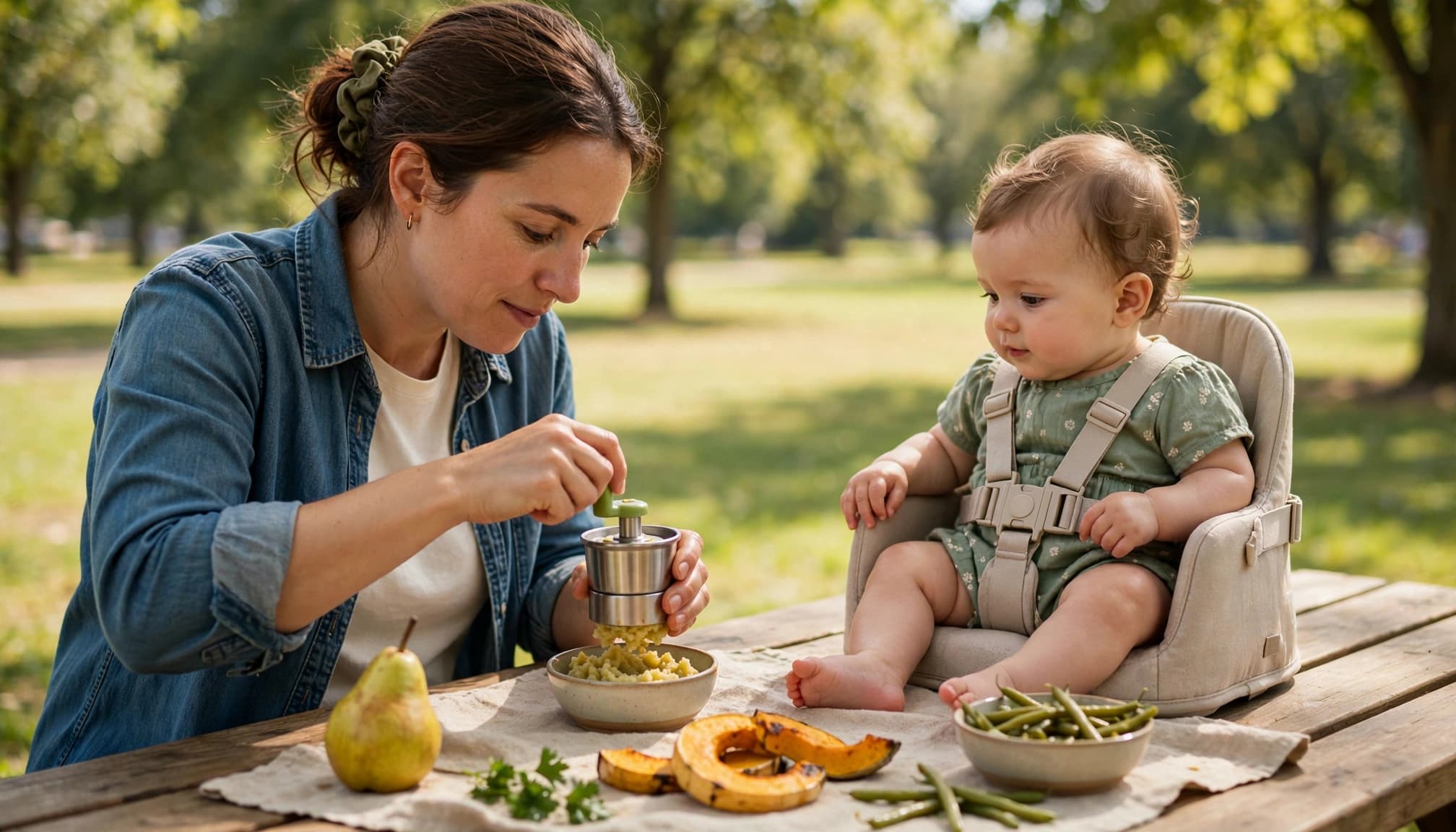
Choose the simplest available ingredient
At a restaurant, ask for an unseasoned baked potato, steamed vegetables, plain rice, scrambled egg, or avocado if available. At a family gathering, a soft piece of roasted squash or a spoonful of beans may be enough.
Food safety still matters away from home. Wash hands before feeding, keep perishable foods cold, and discard leftovers that have been sitting out too long. Always seat your baby upright for eating and stay within arm's reach.
Carry a tool that works without an outlet
A compact hand-powered food masher can turn suitable family food into a baby-ready texture on the spot. That means fewer pouches in the diaper bag and more chances to offer the foods already around you.
The Wonder Wean is made for those in-between moments, when you have a ripe pear, soft vegetables, or a restaurant side dish but no blender. Parents who want a portable option can Buy Now and keep fresh food choices within reach.
A Wider Menu Builds One Meal at a Time
A varied menu grows through ordinary repetition: a new bean beside a favorite vegetable, a different grain at breakfast, or a familiar fruit served in a new texture. You don't need elaborate baby recipes to give food experiences real range.
Keep the focus on safe exposure and steady practice, rather than how much your baby eats. Their appetite will change often, and that is normal.
The Wonder Wean can help parents mash healthy whole foods wherever the day leads, making fresh options more convenient at parks, restaurants, and while traveling. Follow your baby's developmental readiness, prepare every food in a safe texture, and consult your pediatrician for individual feeding or allergy advice.