

Whole Food Baby Meal Prep for Busy Parents
Dinner is underway, your baby is hungry, and the sweet potato you planned to serve is still raw. Whole food baby meal prep helps you avoid that scramble by keeping a few familiar ingredients ready to serve or combine.
You don't need a freezer full of perfect purees. A small, flexible routine gives you fresh options while leaving room for appetite changes, messy meals, and days that run late. Start with the foods your family already buys.
Prep ingredients, not a separate baby menu
A week's worth of identical portions can sound efficient until your baby refuses one on Tuesday. Preparing individual ingredients gives you more choices. A cooked sweet potato can become a smooth mash, sit beside soft beans, or join another food your baby already enjoys.
Look at what you're cooking for yourself first. Before adding a salty sauce or seasoning blend, set aside a suitable portion of cooked vegetables, beans, or meat. Then prepare it in a texture that fits your baby's feeding skills. This saves another round of cooking without assuming your baby can eat every part of the family meal.
Keep ripe foods for days when cooking won't happen. Banana and avocado can be prepared shortly before serving, while plain yogurt may work when you can keep it chilled. Breast milk or infant formula remains central while babies learn to eat solids, so an unfinished bowl doesn't mean the day's feeding plan has failed.
Choose a few whole foods you can use more than once
A short grocery list makes prep easier to repeat. Choose foods you know how to prepare, then vary their pairings rather than buying a different ingredient for every meal.
Start with produce that suits your schedule
Sweet potato, carrots, zucchini, and peas can share a cooking session. Make each one soft enough for the texture you're preparing, then store them separately. Later, you can mash sweet potato with peas or serve zucchini beside another familiar food.
For fruit, buy what you'll use soon. A ripe banana needs little preparation, while a pear can be cooked until soft if its raw texture isn't suitable. Frozen vegetables are useful, too. Plain frozen peas or broccoli let you cook a small amount without worrying that a large fresh bag will spoil.
Add an iron-rich option to the rotation
Produce alone doesn't need to carry every meal. Cooked lentils, soft beans, fully cooked egg, and tender meat give you different foods to pair with vegetables. Iron-rich foods deserve attention as solids become a regular part of your baby's routine.
If you're already cooking lentils for dinner, set some aside before adding salt. You might serve a little with mashed carrot one day and sweet potato another. Choose ingredients and preparations that suit your baby's stage, and ask your pediatrician about individual feeding needs.
Build a whole food baby meal prep routine that fits Tuesday
You don't need to claim an entire Sunday afternoon for batch cooking. Attach one small task to a meal you're making anyway. While a pot simmers or the oven is on, prepare one extra ingredient for your baby.
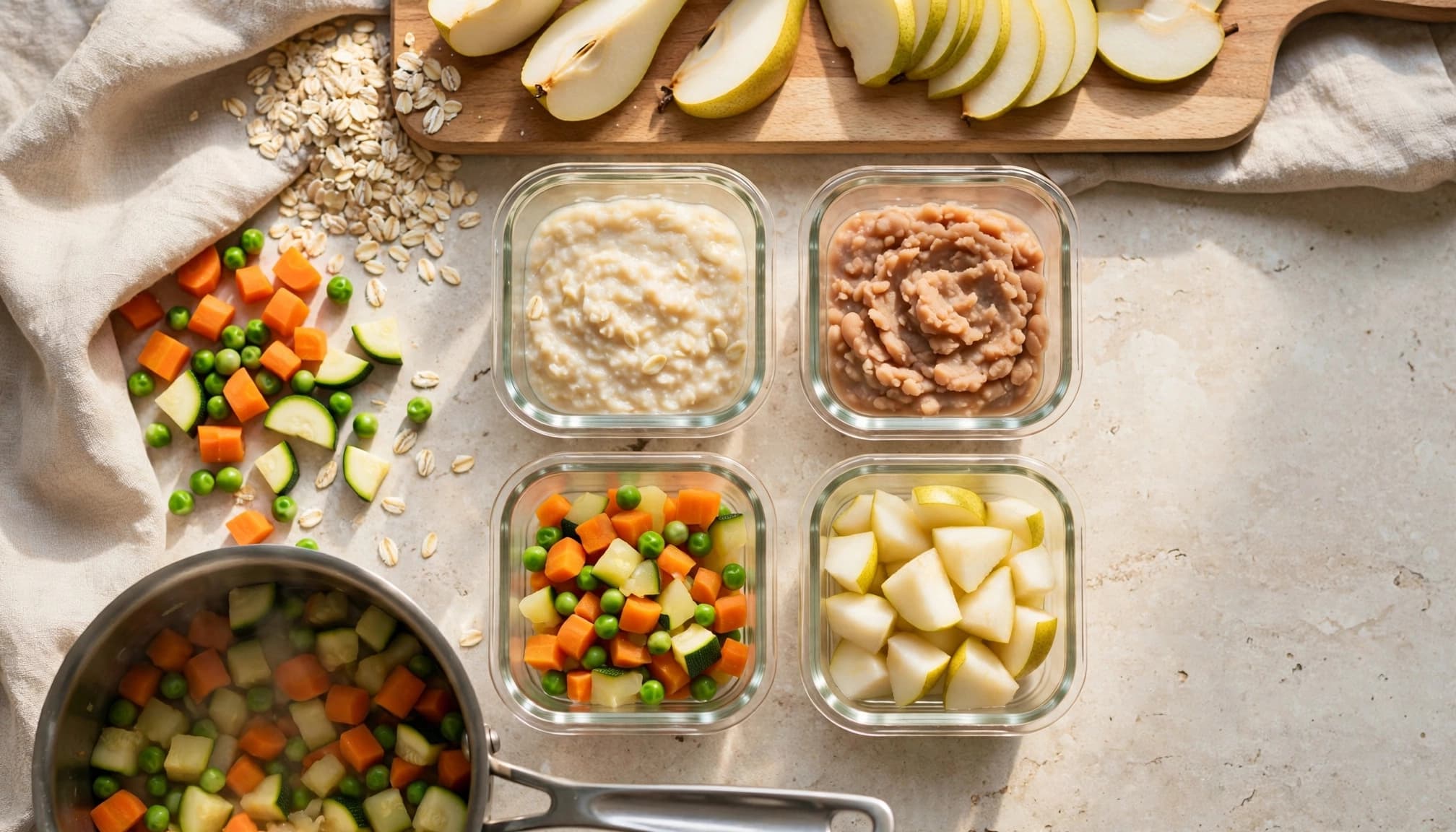
Cook once, then keep ingredients separate
Suppose you're making baked sweet potatoes for dinner. Cook an extra one, remove a portion before toppings go on, and mash or cut it for your baby's current skills. If lentils are on the stove, make enough to set aside a small plain portion as well.
Keeping those foods separate leaves you free to change a meal later. It also helps when your baby likes one ingredient but needs more time with another. You can combine portions when serving instead of committing the whole batch to one recipe.
Portion only what you expect to use
Small containers make it easier to take out a serving without disturbing the rest. Let cooked food cool appropriately, transfer it to clean covered containers, and mark when you prepared it. Freeze portions you won't use within the recommended refrigeration window for that food.
A covered ice-cube tray can hold small portions. Once frozen, move them to a suitable freezer container and label it. On a busy morning, you'll be able to find the sweet potato without guessing which frozen cube is which.
The most useful batch is one you can serve in several ways, not a large batch your baby must finish the same way.
Turn prepared foods into meals without extra cooking
Your fridge doesn't need rows of finished recipes. Two prepared ingredients and one food that needs little work can give you several meals, as long as each suits your baby's needs.
Combine familiar foods at serving time
Mashed sweet potato and soft lentils make one combination. Plain cooked oats can pair with mashed ripe pear; soft beans can sit beside avocado. Keep portions modest at first, then offer more if your baby wants it.
Adding ingredients at serving time also lets you adjust consistency. A mash that's too thick may need thinning to a texture your baby handles comfortably. Check for firm pieces and stir thoroughly, especially after warming a portion. The finished meal should match the way your baby eats now, not the way another baby eats.
Keep new foods easy to identify
When you introduce a food, serving it simply can help you notice how your baby responds. Later, familiar ingredients can share a bowl. This is especially helpful if your family is managing a known allergy or following a feeding plan from your pediatrician.
You can also repeat a food without repeating the entire meal. Cooked carrot might appear with lentils today and with egg another day. Repetition keeps shopping practical while giving your baby another chance to explore a familiar flavor.
Store small batches with less waste
Food storage matters most when you're preparing ahead. Wash your hands and equipment before prep, use clean containers, and keep chilled foods properly chilled. Check current guidance for the ingredients you've made rather than assuming every homemade puree has the same storage life.
Protect the food you haven't served
Spoon a small amount into your baby's bowl and leave the rest covered. Once a used spoon returns to a container, saliva can reach the food you intended to save. Keeping a clean serving spoon separate makes leftovers easier to manage.
Discard food left in the feeding bowl after the meal. If an untouched batch has an unusual smell, appearance, or texture, discard that too. Labels help, but they don't replace checking what you're about to serve.
Freeze extras before they become a chore
Freezing works best when you do it promptly, while you know a portion won't be used soon. Put a preparation date on each container so older food doesn't disappear behind newer batches. Thaw what you need using appropriate food-safety methods, rather than leaving it on the counter.
Warm and stir food carefully, then check its temperature before serving. Only warm the portion your baby is likely to eat. For detailed storage and reheating times, follow current FDA or FoodSafety.gov guidance for homemade baby food and the ingredients involved.
Match the prep to your baby's feeding skills
The same ingredient can look different over time. A soft vegetable might be mashed smoothly for one baby and prepared as manageable soft pieces for another. Let your baby's current skills guide the texture, and stay with them while they eat.
Prep ahead can support that flexibility if you store ingredients before turning all of them into a finished puree. You can soften, mash, or combine a serving when mealtime arrives. Check each portion for pieces that don't suit your baby's stage, including hard skins or bones in family foods.
Some days your baby will eat more; other days they'll be interested in touching the food. Offer a little first and watch their cues. If feeding, swallowing, or allergies are a concern, talk with your pediatrician about foods and textures that fit your baby.
Keep fresh meals possible away from home
A prepared meal isn't helpful if it spends the afternoon getting warm in your bag. Plan around where you're going, how long you'll be out, and whether you can keep perishable food cold.
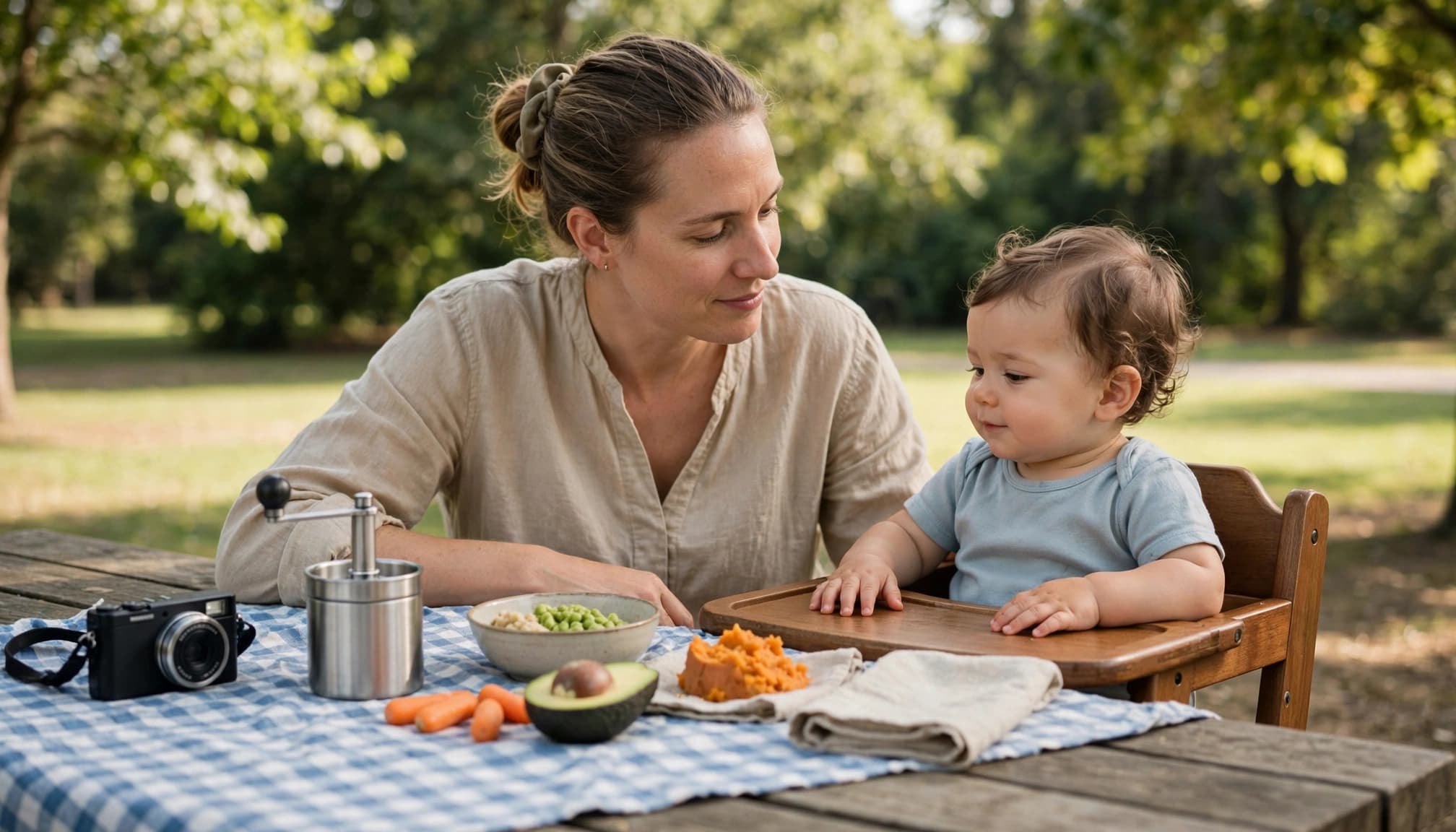
Pack for the next meal, plus a delay
For a short outing, a whole ripe banana may be simpler than a container of premade mash. If you're bringing cooked vegetables, yogurt, or another perishable food, pack it in a sealed container with a cold pack in an insulated bag. Keep it cold until serving, and don't leave it in a hot car.
A small kit can live near the diaper bag: a clean bowl, two spoons, a bib, wipes, and a sealable bag for used items. Add one familiar backup food when travel plans might change. You'll have options without packing a separate meal for every possible delay.
Use suitable foods where you stop
At a restaurant or family gathering, plain soft vegetables, avocado, or other appropriate foods may be available. Set aside a clean portion before sauces or salty toppings are added. Check the temperature and texture, then prepare only what your baby will eat.
Feed your baby while seated upright and supervised. On a road trip, wait until the car is parked for a meal. Fresh food is easier to manage when you can give feeding your full attention and clean the bowl and utensils afterward.
Key Takeaways
- Prep a few versatile ingredients instead of a stack of finished meals.
- Set aside suitable family foods before adding sauces or extra salt.
- Store clean, dated portions separately, and serve from a small bowl.
- Match every texture to your baby's skills, whether you're home or out.
- Bring a cold pack for perishables, or prepare suitable soft food when it's time to eat.
A routine you can keep using
Whole food baby meal prep works best when it reduces decisions rather than adding another task. Start with one extra cooked ingredient, a few small containers, and foods your baby already knows. As your baby's skills change, the same flexible routine can change with them.
The Wonder Wean can help you offer healthy foods on the go without carrying a countertop blender. Its compact, hand-powered design lets you prepare a small serving from suitable soft foods at a park, restaurant, or family visit. If fresh feeding away from home fits your routine, Buy Now to keep a portable food maker with your baby's meal kit.