

Baby Food Travel: Fresh Meals on the Go
Baby food travel gets much easier when you stop treating each meal like a tiny catering job. A few familiar foods, a cold pack, and a compact feeding kit can help you serve fresh meals without carrying a full kitchen.
The goal isn't perfect timing. Keep food safe, pack portions your baby can finish, and plan one flexible backup for delays. A practical baby food travel plan starts with your baby's routine, the trip length, and access to refrigeration.
How to Build a Baby Food Travel Plan That Works
Travel days feel calmer when you decide what needs chilling, what can stay whole, and what you can prepare after arrival. Plan around the next meal, then add a small cushion for delays.
Start with foods your baby already knows
Use ingredients and textures your baby already eats at home. A trip isn't the right time to introduce several unfamiliar foods, especially when you won't have your usual kitchen or routine.
Pack familiar soft foods such as ripe banana, avocado, cooked sweet potato, plain oatmeal, or vegetables your baby already handles. Keep produce whole when possible, then mash it closer to mealtime. Whole foods take less space and often stay in better condition than prepared puree.
If your baby eats finger foods, bring the same soft shapes you serve at home. Follow your family's usual feeding approach, and supervise meals as you normally do.
Match food to the length of the trip
For a short car ride, one small container may be enough. A full travel day needs more planning, especially if you won't have a refrigerator.
Count the meals and snacks you expect to serve, then pack one extra small portion for traffic, a delayed flight, or a missed nap. Choose foods that fit the destination. A banana can be mashed at a rest stop, while prepared oatmeal needs reliable temperature control.
During longer baby food travel days, check your route for a grocery store, hotel fridge, or restaurant that can provide plain ingredients. That small bit of research keeps you from packing more than you can safely store.
What to Pack for Fresh Baby Food Travel
Pack for the next feeding, not every possible scenario. A small insulated bag is easier to keep cold and clean than an overfilled tote.
Pack small portions in separate containers
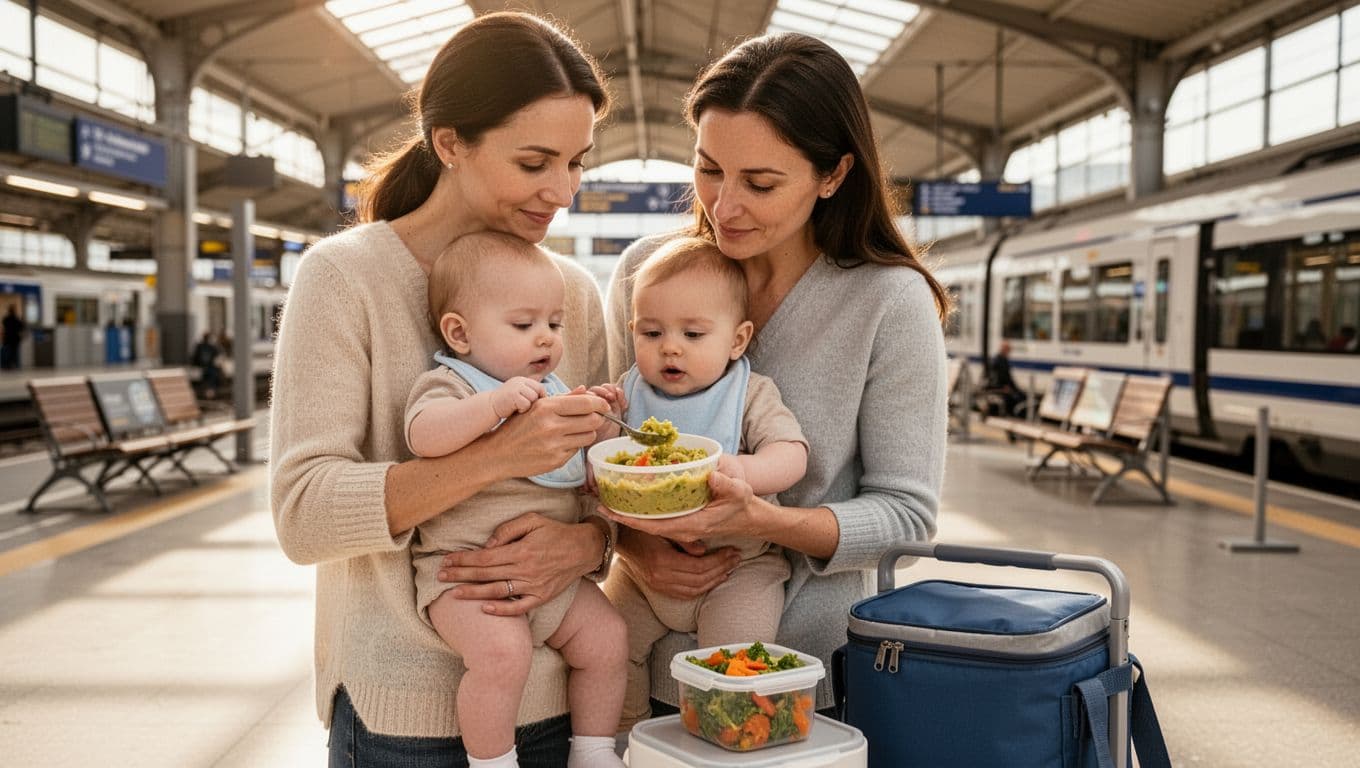
Use leak-resistant containers with secure lids. Pack only the amount your baby is likely to eat at one sitting, then carry one spare portion for unexpected delays.
Separate ingredients when possible. A container with banana, avocado, and cooked vegetables mixed together may spoil faster than individual ingredients kept apart and mashed shortly before eating. Smaller portions also limit the number of times food warms up while you search for a meal.
Keep produce such as bananas, avocados, and whole pears intact until you need them. Cut fruit and vegetables close to serving time, and place prepared food in the cooler right away.
Bring a simple feeding kit
A useful baby food travel kit can fit inside a small pouch. Include:
- A lidded bowl and a small baby spoon.
- One clean spare spoon for a dropped utensil.
- A washable bib and a few clean cloths.
- Hand wipes or sanitizer for adults, plus soap and water whenever available.
- A sealable bag for used spoons, messy bibs, and food scraps.
- Frozen ice packs that sit tightly around chilled containers.
Choose supplies you can rinse or wipe quickly. A lightweight silicone bowl and reusable cloth reduce the number of disposable items in your bag.
Keep Fresh Baby Food Safe on the Road
Good baby food travel depends more on temperature control than on fancy containers. Fresh food needs the same care in a car, airport, hotel room, or picnic area that it receives at home.
Keep perishable food cold
Use a refrigerator or an insulated cooler with frozen ice packs for prepared foods, cut produce, dairy, eggs, and other perishables. Keep the cooler closed as much as possible, and place it away from direct sun or a hot car seat.
A refrigerator should stay at 40°F (4°C) or colder. Perishable food shouldn't sit at room temperature for more than two hours, or more than one hour when the temperature is above 90°F (32°C).
If you carry food for several hours, a small food thermometer can tell you more than touch alone. When the ice packs have fully thawed and the food no longer feels properly chilled, discard the perishable portion rather than saving it for later.
An insulated bag slows warming, but it doesn't stop it. The safe holding time still matters once food leaves the refrigerator.
Keep preparation clean
Wash your hands before handling food and before feeding your baby. If a sink isn't nearby, clean your hands with sanitizer first, then wash them properly when you can.
Wipe the surface where you'll prepare the meal. Use a clean spoon to move food into the baby's bowl, and don't feed directly from a shared container. If the spoon touches your baby's mouth, keep it out of the remaining food.
Rinse produce before leaving home when possible. At a destination, use a clean knife and surface for cutting. Never place prepared food on a surface that held raw meat, unwashed produce, or dirty dishes.
Prepare Fresh Meals at Your Destination
Fresh meals can be easier once you arrive because you can buy one soft ingredient instead of carrying several prepared servings. A grocery store, hotel breakfast area, restaurant, or park picnic can all work with a little planning.
Choose soft, plain ingredients
Look for foods with a soft texture and simple ingredients your baby already eats. Ripe banana, avocado, plain sweet potato, soft cooked vegetables, and unsweetened oatmeal are practical choices.
At a restaurant, ask for plain components before sauces, dressings, or heavy seasoning are added. Soft vegetables, avocado, rice, or beans may work when the staff can confirm the ingredients and prepare them safely.
Avoid guessing about foods with unknown ingredients. If your baby has known allergies or your family follows specific feeding guidance, keep those boundaries in place while traveling. Familiar food is usually easier for everyone than a risky last-minute choice.
Mash only what your baby will eat
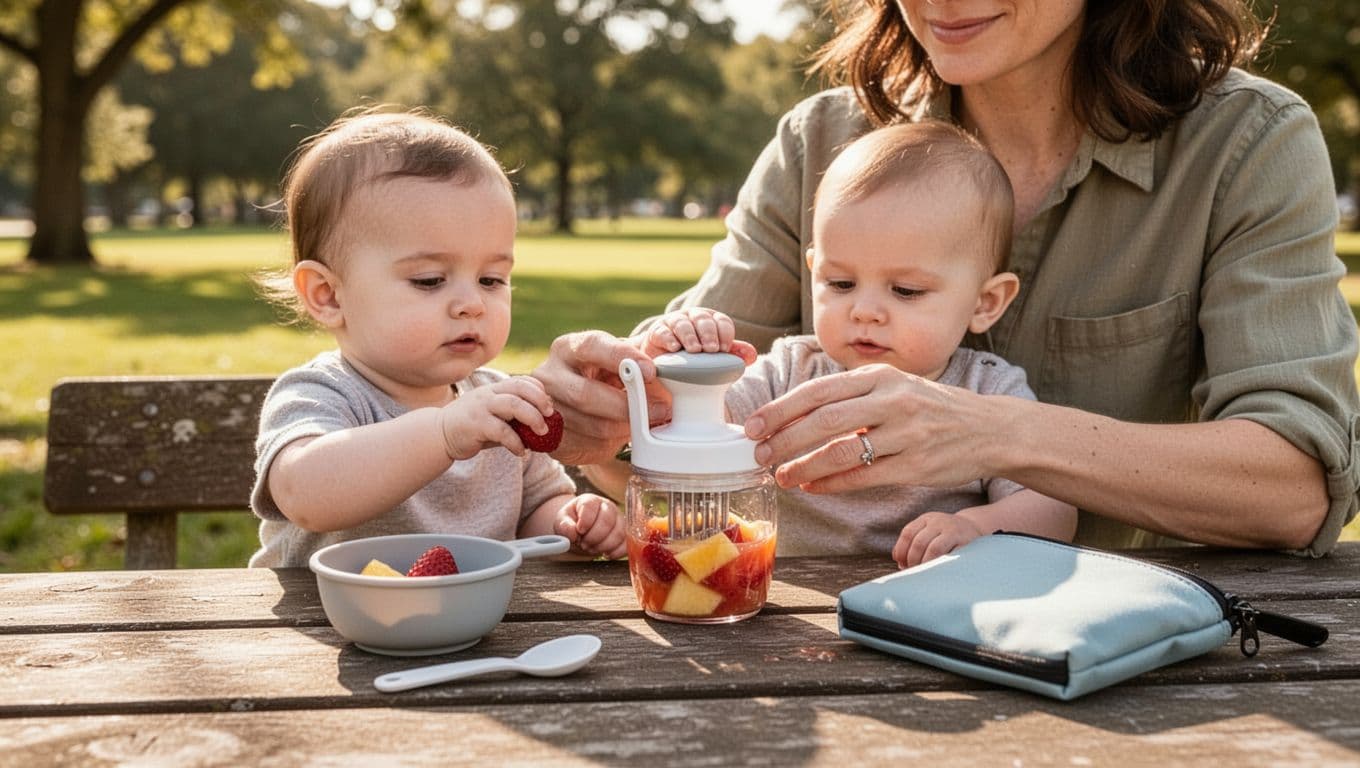
Prepare a small baby-sized portion at mealtime, then adjust the texture with a little water or another familiar liquid if needed. Mash until it matches the texture your baby already handles.
A hand-powered pocket blender can help when you don't have access to electricity. The Wonder Wean lets you mash soft foods on the spot using ingredients available at home, restaurants, parks, or while traveling. It also helps you avoid opening a full container when your baby only needs a few spoonfuls.
If this fits your routine, you can Buy Now and keep a compact fresh-food tool in your travel bag.
Handle Leftovers Without Guesswork
Leftovers create the most confusion during travel because a meal can move between a cooler, a stroller, and a restaurant table in a single afternoon. Serving small amounts makes the decision easier.
Serve a little first
Put a small portion into the baby's bowl and keep the rest sealed. Add more only when your baby is still hungry. This prevents an entire serving from becoming waste after a few bites.
For restaurant meals, ask for a small side portion when possible. You can mash more plain food if needed, but you won't have to store a large bowl of leftovers after feeding.
If you prepare food in advance, divide it into individual containers before leaving home. One container should equal one planned feeding, not the whole batch.
Know when to discard food
Discard food that your baby has eaten directly from. Saliva can introduce bacteria into the remaining portion, so don't place that food back in the cooler.
Untouched food can go into a clean, covered container and return to the refrigerator promptly. Keep it at 40°F (4°C) or colder, and use homemade purees within one to two days unless your recipe or food-safety guidance gives a shorter window.
Throw food away if it sat at room temperature beyond the safe time limit, warmed for an unknown period, or leaked into a dirty bag. Smell and appearance can't always tell you whether food is safe.
When you have doubts, choose a simple fresh ingredient at the next stop instead of carrying questionable leftovers through the rest of the trip.
Conclusion
Fresh baby food travel doesn't require a large cooler or a complicated meal plan. Pack familiar foods, keep perishables cold, mash portions near mealtime, and discard anything that has been warm too long or touched by your baby's spoon.
The Wonder Wean gives parents a compact, hand-powered way to mash soft foods wherever the day takes them. With ingredients available at home, a restaurant, a park, or a travel stop, you can offer healthy foods in portions that suit your baby and your real family routine.