

Baby Food Serving Sizes From 6 to 12 Months
A baby's appetite can change dramatically from one meal to the next. That can make baby food serving sizes feel confusing, especially when your little one eats two bites at breakfast and reaches for more at dinner.
Age gives you a useful starting point, but your baby's hunger, feeding skills, and usual breast milk or formula intake matter more than an empty bowl. Small, flexible portions let you offer nourishing foods without turning mealtime into a struggle.
Key Takeaways for Feeding Babies 6 to 12 Months
Babies usually begin complementary foods around 6 months, once they can sit with support, hold their head steady, and bring food toward their mouth. Breast milk or infant formula remains their main source of nutrition throughout the first year.
Start with 1 to 2 tablespoons of a soft food. Offer more when your baby stays interested, and stop when they turn away, close their mouth, or push food aside.
Daily food amounts rise gradually as skills and appetite grow. However, baby food serving sizes are guides, not targets your child needs to finish. Texture, supervision, and safe food preparation matter just as much as quantity.
A baby who eats less at one meal may make up for it at the next. Look at eating patterns over several days, not one spoonful at a time.
Baby Food Serving Sizes by Age: 6 to 8 Months
At this stage, solids are still new. Meals are mostly a chance to explore tastes, textures, and the skill of moving food around the mouth.
Begin with small spoonfuls
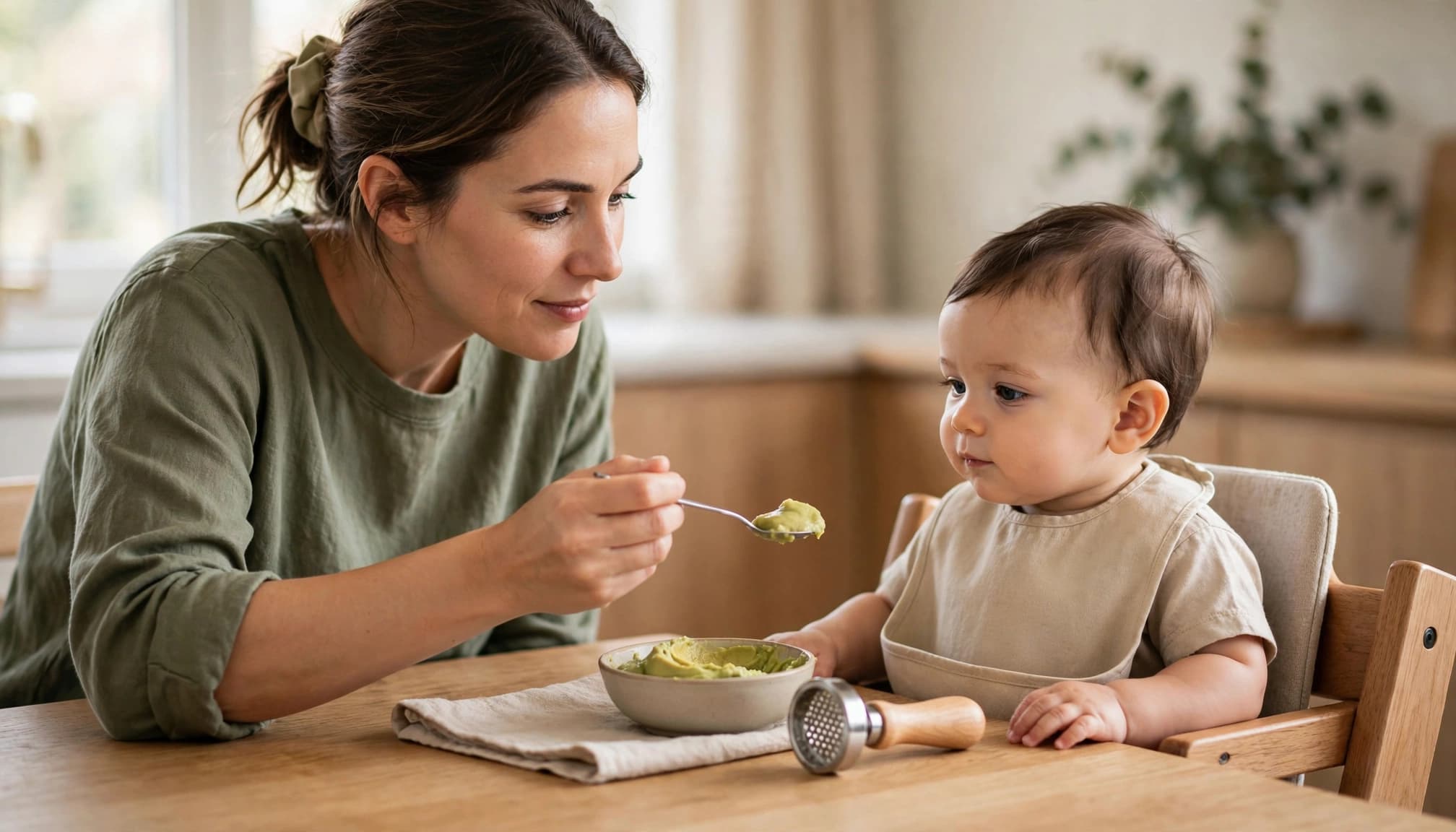
Offer 1 to 2 tablespoons of one food or a simple combination once or twice a day. Mashed avocado, sweet potato, plain full-fat yogurt, cooked apple, beans, and iron-fortified infant cereal are gentle options.
If your baby eagerly opens their mouth and leans forward, offer another small spoonful. When they lose interest, the meal can end. You don't need to persuade them to take another bite.
Focus on iron and soft energy-rich foods
Breast milk is low in iron after about 6 months, so include iron-rich foods often. Soft lentils, mashed beans, finely blended meat, fully cooked egg, tofu, and iron-fortified cereal all fit well.
For a satisfying bowl, pair an iron-rich food with a soft fruit or vegetable. Mashed lentils and carrot, sweet potato with shredded chicken, or avocado with fully cooked egg are simple whole-food meals.
How Portions Grow From 8 to 12 Months
Between 8 and 12 months, many babies show more interest in meals and begin handling thicker food. Milk feeds still matter, while solid food becomes a larger part of the day.
Offer meals more regularly
Many babies move toward three meals and two or three snacks as they approach their first birthday. That pattern is flexible. Some days include a bigger breakfast, while other days your baby may prefer milk and a few small tastes.
Start each meal with a modest serving. A few tablespoons of mashed vegetables, fruit, beans, cereal, or tender protein is enough to begin. Add more only if your baby remains hungry.
Let skills guide the portion
Older babies often want to self-feed. Soft strips of omelet, ripe avocado wedges, tender pasta, squash, or finely shredded chicken can give them practice.
Larger soft pieces are often easier for early self-feeders to hold than tiny cubes. As the pincer grasp develops, you can offer small, soft pieces that squash easily between your thumb and finger.
A Simple Daily Guide for Baby Food Serving Sizes
The USDA's WIC guidance gives approximate daily ranges for complementary foods. These amounts are spread across meals and snacks, not placed in front of your baby at one sitting.
| Food group | Around 6 to 8 months | Around 8 to 12 months |
|---|---|---|
| Grains | 1 to 2 oz per day | 2 to 4 oz per day |
| Vegetables | 2 to 4 oz per day | 4 to 6 oz per day |
| Fruit | 2 to 4 oz per day | 4 to 6 oz per day |
| Protein-rich foods | 1 to 2 oz per day | 2 to 4 oz per day |
A growing baby may eat near the top of these ranges one day and much less the next. Use them to plan variety, rather than measuring every bite.
What one small meal can look like
For a younger baby, a meal might be 2 tablespoons of mashed sweet potato mixed with a little soft lentil puree. Another option is a few spoonfuls of plain yogurt with mashed ripe banana.
An older baby may eat several tablespoons of soft beans and squash, then pick up a tender broccoli floret or a strip of egg. Keep the first portion small, because you can always offer more.
Build variety across the day
You don't need every food group at every meal. Instead, offer different foods over the day and week. Oatmeal with cooked pear can work at breakfast, mashed beans and vegetables at lunch, and soft fruit with yogurt later on.
Plain family food can also work when you set aside an unsalted portion before sauces, salty seasonings, or sweeteners are added.
Breast Milk and Formula Still Come First
From 6 through 12 months, breast milk and infant formula remain the main source of nutrition. Solids add iron, energy, flavor, and feeding practice, but they don't replace regular milk feeds during the first year.
USDA WIC materials list roughly 24 to 32 ounces of formula per day for many babies ages 6 to 8 months. Around 8 to 12 months, about 24 ounces is a common reference point. Your baby's needs may differ, so follow your pediatrician's guidance.
Offer food without pressure
Responsive feeding helps babies pay attention to hunger and fullness. Sit together, offer food, and let your baby choose whether to eat and how much.
A baby who grabs the spoon, leans forward, or opens their mouth may want more. Turning away, clamping their mouth shut, throwing food repeatedly, or becoming distracted often means they are done.
Small amounts of water are enough
You can offer small sips of plain water with meals once solids begin. The CDC lists 4 to 8 ounces a day as a general range for babies 6 to 12 months.
Water doesn't replace breast milk or formula. It simply helps your baby practice drinking from an open cup or a small cup with assistance.
Match Food Texture to Your Baby's Skills
Texture should progress with your baby's ability, not only their age. Some babies move to soft lumps quickly, while others need more time with smooth mashes.
Start thick, smooth, and spoonable
Early foods should be smooth or softly mashed, with no hard bits, skins, pits, bones, or stringy pieces. A thick puree that stays on a spoon often gives a new eater more control than a runny mixture.
Mash ripe banana or avocado with a fork. Cook carrots, apples, beans, or squash until soft, then blend or mash them. Use water, breast milk, prepared formula, or cooking liquid to loosen food only when needed.
Gradually introduce soft lumps and pieces
Once your baby handles smooth foods comfortably, make mashes thicker and leave tiny, soft lumps. Fork-mashed beans, mashed egg, soft pasta, and finely minced meat are useful next steps.
By 9 to 12 months, many babies can manage tender finger foods. Offer pieces that squish easily between your fingers, such as ripe pear cooked until tender, soft zucchini spears, or shredded chicken.
Food Safety Rules That Matter at Every Meal
Fresh food can be simple, but the way you prepare it makes a real difference. Keep your baby upright in a stable high chair and stay within arm's reach while they eat.
Skip honey, added sugar, and excess salt
Don't offer honey before 12 months, even when it is baked into food or stirred into cereal. Honey can contain spores linked to infant botulism.
Babies also don't need added sugar or salty sauces. Natural flavors help them get used to vegetables, grains, fruit, and proteins without relying on sweet or salty tastes.
Change the shape of choking hazards
Avoid whole nuts, popcorn, hard raw carrots, hard apple pieces, sausage coins, thick spoonfuls of nut butter, and whole grapes. Cook firm produce until soft, and remove pits, tough skins, bones, and large pieces.
Cut grapes and cherry tomatoes lengthwise into small pieces. Spread nut butter thinly or stir a small amount into oatmeal or yogurt. Gagging is often noisy as babies learn, while choking can be quiet and needs immediate action.
Introduce allergens with a calm plan
Common allergens include peanut, egg, dairy, wheat, soy, sesame, fish, shellfish, and tree nuts. Once your baby is ready for solids, offer one new allergen at a time in a safe form and earlier in the day.
Try smooth peanut butter thinned into yogurt or cereal, or offer a small amount of fully cooked egg. If your baby has severe eczema, a known food allergy, or a previous reaction, speak with your pediatrician before introducing allergens. Seek emergency care for breathing trouble, facial or tongue swelling, repeated vomiting, or widespread hives.
FAQ About Baby Food Portions
How much should a 6-month-old eat per meal?
Start with 1 to 2 tablespoons of soft food once or twice a day. Some babies will eat less, while others will ask for more. Breast milk or formula remains the main source of nutrition.
How much should a 9-month-old eat each day?
Many 9-month-olds eat three small meals plus milk feeds. Daily complementary-food ranges often include 2 to 4 ounces of grains, 4 to 6 ounces each of fruit and vegetables, and 2 to 4 ounces of protein-rich food. Use appetite and growth guidance from your pediatrician to personalize those amounts.
When should baby food become chunkier?
Move toward thicker mashes and soft lumps when your baby manages smooth food comfortably. By 10 to 12 months, many babies can eat soft finger foods. If chewing, swallowing, growth, or food refusal concerns you, ask your pediatrician for individual advice.
A Flexible Way to Feed Your Growing Baby
The most helpful baby food serving sizes give you a place to start, then leave room for your child's appetite. Offer small portions, keep milk feeds steady, and gradually build skills with soft, nourishing family foods.
The Wonder Wean helps parents prepare healthy foods wherever the day leads. With a compact hand-powered baby food maker, you can mash a ripe avocado, soft vegetables, or an unsalted family meal on the spot. Buy Now to make fresh baby meals easier at home, at the park, or while traveling.