

Baby Food Safety at Picnics: Pack, Serve, and Store
A picnic can make feeding your baby feel wonderfully simple until a container of homemade food sits in the sun. Cold storage and clean serving matter as much outdoors as they do in your kitchen. For baby food safety, pack perishable foods cold, serve small portions, and throw away anything your baby has eaten from.
You can still bring the fresh foods your family enjoys. Start by choosing foods that suit your baby's feeding skills, then plan how you'll keep them safe until mealtime.
Choose picnic foods your baby can already eat
Match the food to your baby's stage
If your baby hasn't started solids, a picnic isn't a reason to start early. Babies generally begin solids around 6 months, when they're developmentally ready. Your pediatrician can help if you're unsure about readiness or feeding needs.
Once solids are part of your routine, bring foods your baby handles comfortably at home. A ripe banana may be easy to mash at the park. Cooked vegetables, beans, eggs, or meat can work too, but they need appropriate preparation and cold storage. Choose a texture that fits your baby's current skills, and check each serving for bones, tough skins, seeds, or hard pieces.
Keep choking risks in mind
A blanket full of food attracts little hands. Keep adult picnic foods, especially nuts, whole grapes, popcorn, raw carrot pieces, and round slices of sausage or hot dog, out of your baby's reach. Don't assume that mashing will make every ingredient suitable.
Offer food while your baby sits upright, and stay close throughout the meal. If your baby has a food allergy or a feeding plan, stick with the guidance you use at home. A busy picnic is a poor setting for trying several unfamiliar foods at once.
Pack small portions and a clean feeding kit
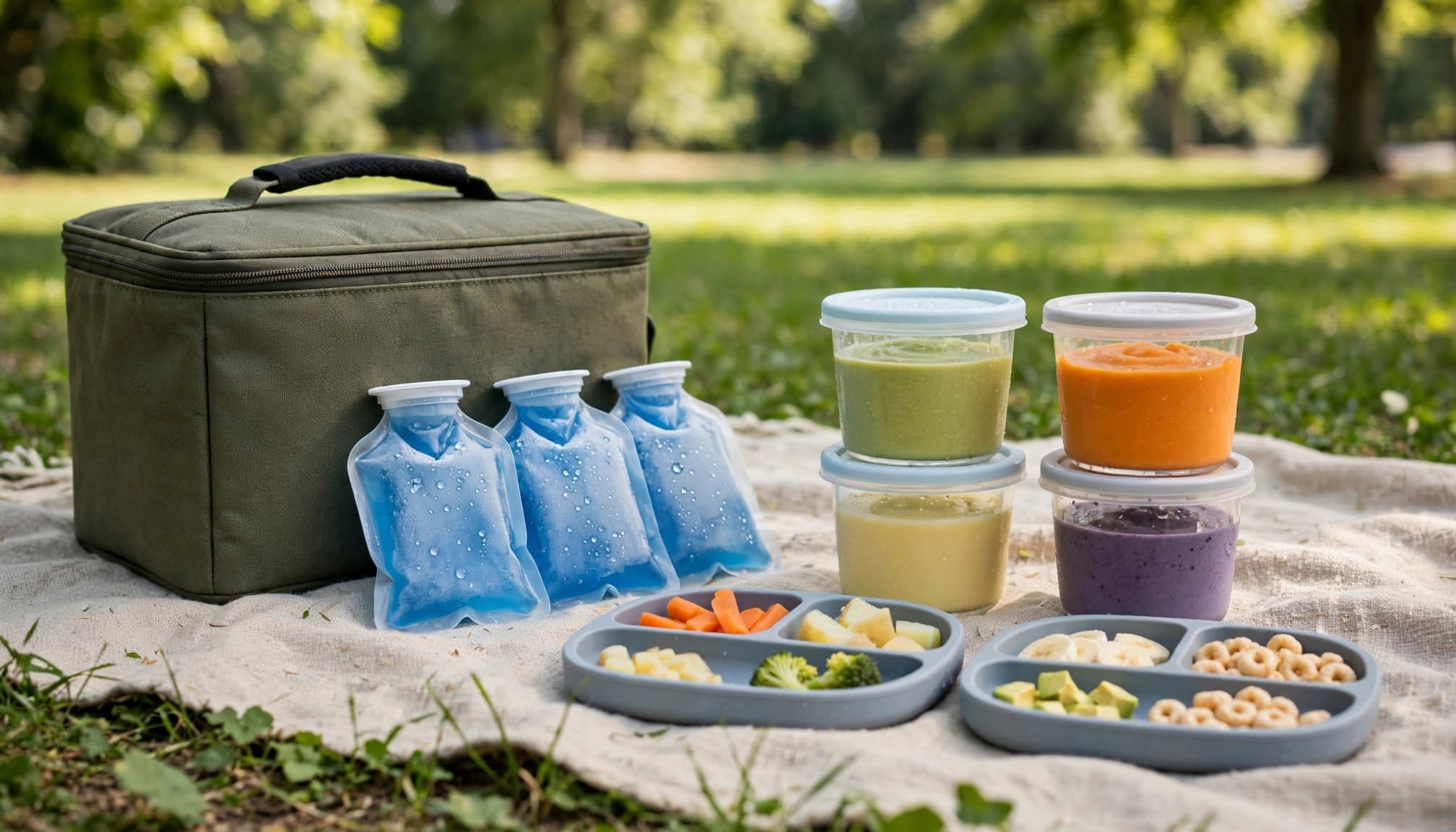
Separate ready-to-eat food from the rest
Chill cooked foods and homemade purees before leaving home. Divide them into clean, leak-resistant containers sized for one feeding. With small portions, you can take out one meal without repeatedly opening a larger batch.
Keep a banana or avocado whole until you're ready to prepare it. If you're bringing cut fruit, cooked vegetables, yogurt, or other perishable food, pack it cold right away. Rinse produce under running drinking-quality water before cutting or peeling it. A park table is rarely the easiest place to wash fruit well.
If the family is bringing raw meat for a barbecue, keep it sealed and away from your baby's food, utensils, and ready-to-eat produce. Separate coolers make that easier when you have them.
Put clean and used supplies in different places
A compact kit is enough for most picnic meals:
- Pack a clean lidded bowl, a baby spoon, and a spare spoon in case one falls.
- Bring a bib, clean cloths, and soap and water if they're available at your picnic spot.
- Carry a sealable bag for used utensils, food scraps, and messy bibs.
- Add frozen ice packs that fit closely around chilled food containers.
Keep the clean spoon wrapped or covered until mealtime. After feeding, put used items straight into their bag rather than beside unopened food. Wash reusable bowls, spoons, and food-preparation tools with hot, soapy water when you get home.
Keep perishable baby food cold
Build the cooler around the food
The FDA and USDA advise keeping cold perishable food at 40°F (4°C) or below. Use an insulated cooler with plenty of ice or frozen gel packs, and start with food that's already chilled. A cooler thermometer helps you check the temperature instead of guessing from how cold a container feels.
Place ice packs next to the food, close the cooler promptly, and keep it in the shade. Avoid leaving it in a parked car or sunny stroller. If adults will open the family cooler throughout lunch, a smaller cooler just for your baby's food may be easier to keep cold.
Know when the time limit starts
Once perishable food leaves cold storage, don't leave it out for more than two hours. When the outdoor temperature is above 90°F (32°C), the limit drops to one hour. Those limits apply to foods such as yogurt, cooked vegetables, eggs, meat, cut fruit, and prepared purees.
The picnic clock starts when food comes out of cold storage, not when your baby takes the first bite.
The FDA's outdoor food safety guidance recommends cold holding and these shorter limits in hot weather. If you can't tell how long food has been warm, discard it. Putting it back on ice doesn't undo time spent at an unsafe temperature.
Wash hands and protect the serving area
Clean up before opening the container
Picnics involve diaper changes, playground equipment, pets, and shared tables. Wash your hands with soap and running water for at least 20 seconds before preparing or serving food. Wash again after a diaper change, bathroom visit, or handling a pet.
If no sink is available, pack drinking-quality water and soap when practical. Hand sanitizer is useful when you can't wash, but visibly dirty hands need soap and water. Wipe down the feeding surface, and set clean utensils on a clean cloth or mat instead of directly on the table.
Prevent cross-contamination while preparing food
Use a clean spoon or tool for your baby's meal. Don't use the utensil that handled raw meat, and don't dip a spoon from your baby's mouth into the main food container. If a spoon falls onto the ground, switch to the spare.
Before preparing a fresh portion, check that fruit skins are clean and your bowl and tool are ready to use. Keep the diaper bag's used-wipe pocket separate from feeding supplies. These small boundaries are easy to maintain, even when lunch is happening on a blanket.
For baby food safety, what touches the food matters as much as how long the food stays cold. A well-packed cooler can't protect a puree after a contaminated spoon goes back into its container.
Serve a little, then decide if your baby wants more
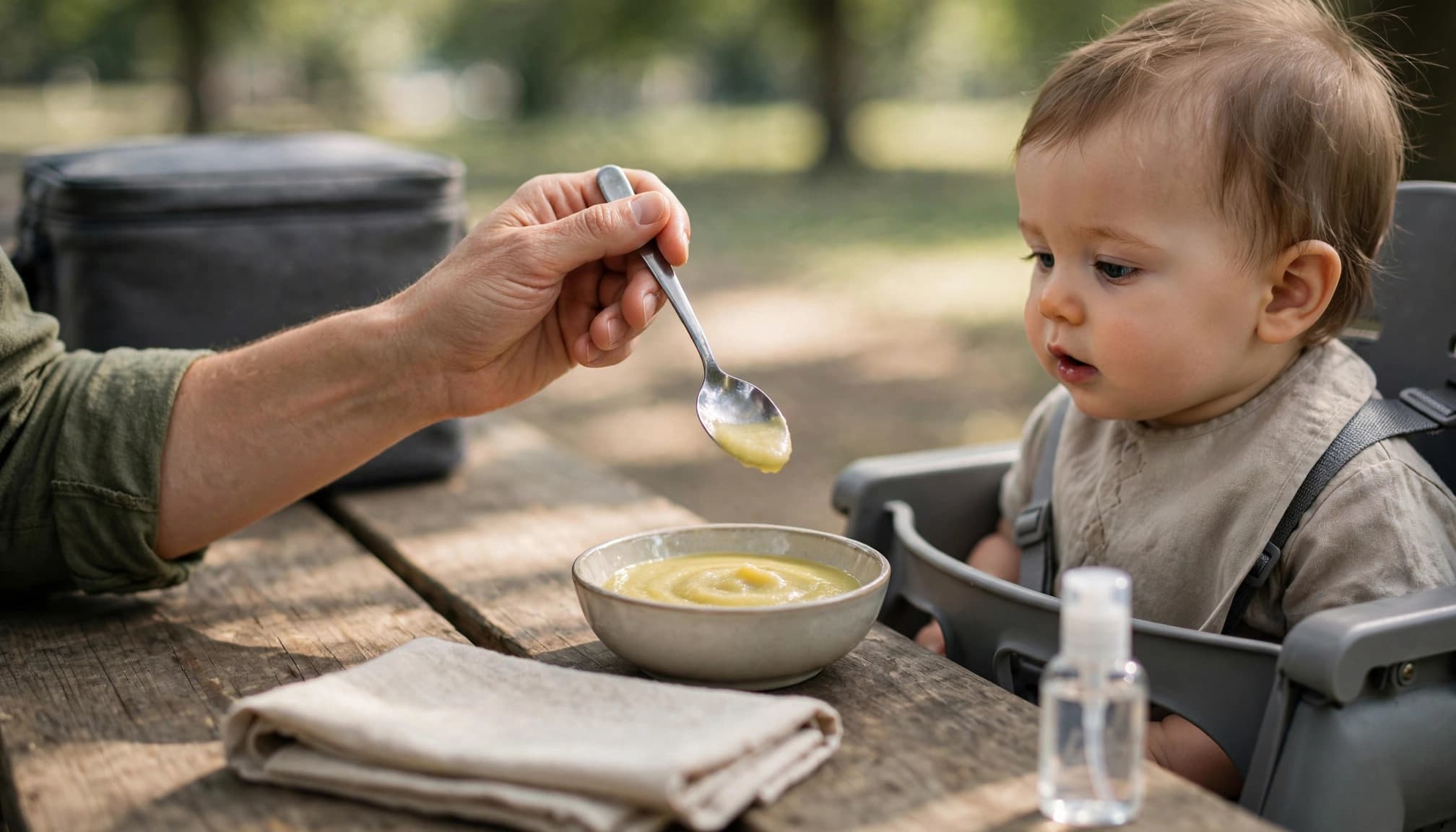
Portion food into a separate bowl
Spoon a small amount into a clean bowl and close the main container before feeding. If your baby wants more, use a clean utensil to add another serving. This protects the untouched food from saliva and lets you keep it cold.
The FDA's guidance for feeding babies warns against feeding directly from a baby-food jar and then refrigerating what remains. The same approach makes sense for homemade food: treat the serving bowl and storage container differently.
An unopened, shelf-stable jar or pouch can be a useful backup when you can't maintain a cold cooler. Once opened, follow its label directions and treat the exposed food as perishable.
Check temperature, texture, and position
Food doesn't need to be warm to be a good picnic meal. If you do warm a serving, use a separate dish, stir it, and check the temperature before feeding. The FDA advises against microwaving baby food in its jar.
Mash or prepare soft ingredients to the texture your baby already manages. Then seat your baby upright and supervise every bite. Don't feed while your baby crawls around the blanket or lies back in a stroller. Keep breast milk or prepared formula on its own storage plan and follow the applicable preparation and handling directions.
Handle leftovers without guesswork
Discard anything your baby ate from
Once a spoon has been in your baby's mouth, saliva can reach the food in the serving bowl. Throw away what's left there rather than returning it to the cooler. The same applies if your baby eats directly from a jar or pouch.
Don't save food because it still smells fine. Harmful bacteria don't always change its appearance or odor. Food that has passed the two-hour limit, or the one-hour limit above 90°F, belongs in the trash even if your baby barely touched it.
Save only food that stayed clean and cold
An untouched portion in a clean, covered container can stay in a properly cold cooler. Keep it at 40°F or below, and refrigerate it promptly when you get home. Follow the storage directions for the food or recipe you've prepared.
If the cooler warmed up and you can't establish how long the food was above a safe temperature, throw it out. Also discard any container that leaked into a dirty bag. When there's doubt, a freshly prepared serving from a suitable whole ingredient is a better choice than questionable leftovers.
Have a simple plan for delays
Picnic meals rarely happen on schedule. Pack enough food for the next expected feeding and one sensible backup, rather than filling a bag with portions you can't keep cold. A whole ripe banana can be useful if lunch runs late, provided you can clean your hands and prepare it safely when needed.
Before leaving, check whether the picnic spot has drinking water, handwashing facilities, and reliable shade. If it doesn't, bring what you'll need for cleanup and temperature control. For a longer outing, plan how you'll replace ice or get perishable food into a refrigerator.
At the park, take out one container at a time. Keep the rest of the cooler closed, especially while everyone else serves lunch. If the day turns hotter than expected, use the shorter food-safety limit and adjust the meal plan. A flexible backup helps you discard unsafe food without feeling pressed to serve it.
Key takeaways for picnic feeding
- Start with familiar, age-appropriate foods and keep choking hazards out of reach.
- Pack perishable baby food at 40°F or below, with enough ice to keep it cold.
- Wash hands, use clean utensils, and portion food into a separate feeding bowl.
- Discard food your baby has eaten from and perishables left out too long.
- Above 90°F, the outdoor time limit for perishable food is one hour, not two.
Fresh food can fit into a safe picnic routine
That container left in the sun isn't worth saving. With a cold cooler, clean supplies, and small servings, you can offer fresh food outdoors without guessing which leftovers are safe.
Wonder Wean can be part of a feeding kit for parents who want to prepare familiar, healthy ingredients while they're on the go. Check the current product instructions for suitable foods and cleaning before using it. Whatever tool you bring, keep perishable ingredients cold, match each serving to your baby's skills, and prepare only what they're likely to eat.