

Are Baby Food Pouches Healthy for Everyday Feeding?
A pouch can rescue a rushed morning, a long drive, or a hungry baby at the park. Baby food pouches can fit into a healthy feeding routine, but they work best as a convenience food rather than the main way your baby eats.
What matters most is the full picture: ingredients, texture, feeding habits, and the other foods your baby experiences each week. A balanced approach gives you the ease of a pouch without letting smooth puree replace real-food practice.
Baby Food Pouches: The Practical Answer
Most baby food pouches are not automatically unhealthy. Many contain fruit, vegetables, yogurt, oats, beans, or meat in a portable package. For a baby who is starting solids, a simple puree can be an appropriate texture.
However, everyday feeding needs more than pureed food. Babies learn through taste, texture, smell, touch, and the messy work of moving food around their mouths. If every meal comes through a pouch, those experiences can become limited.
A pouch is useful, not a complete feeding plan
Keep pouches in the diaper bag for travel days, appointments, flights, or emergencies. They are also useful when you need a shelf-stable option that your baby already accepts.
At home, offer food in a bowl with a spoon or place developmentally appropriate soft foods on your baby's tray. This helps your child see food, touch it, and gradually take part in feeding.
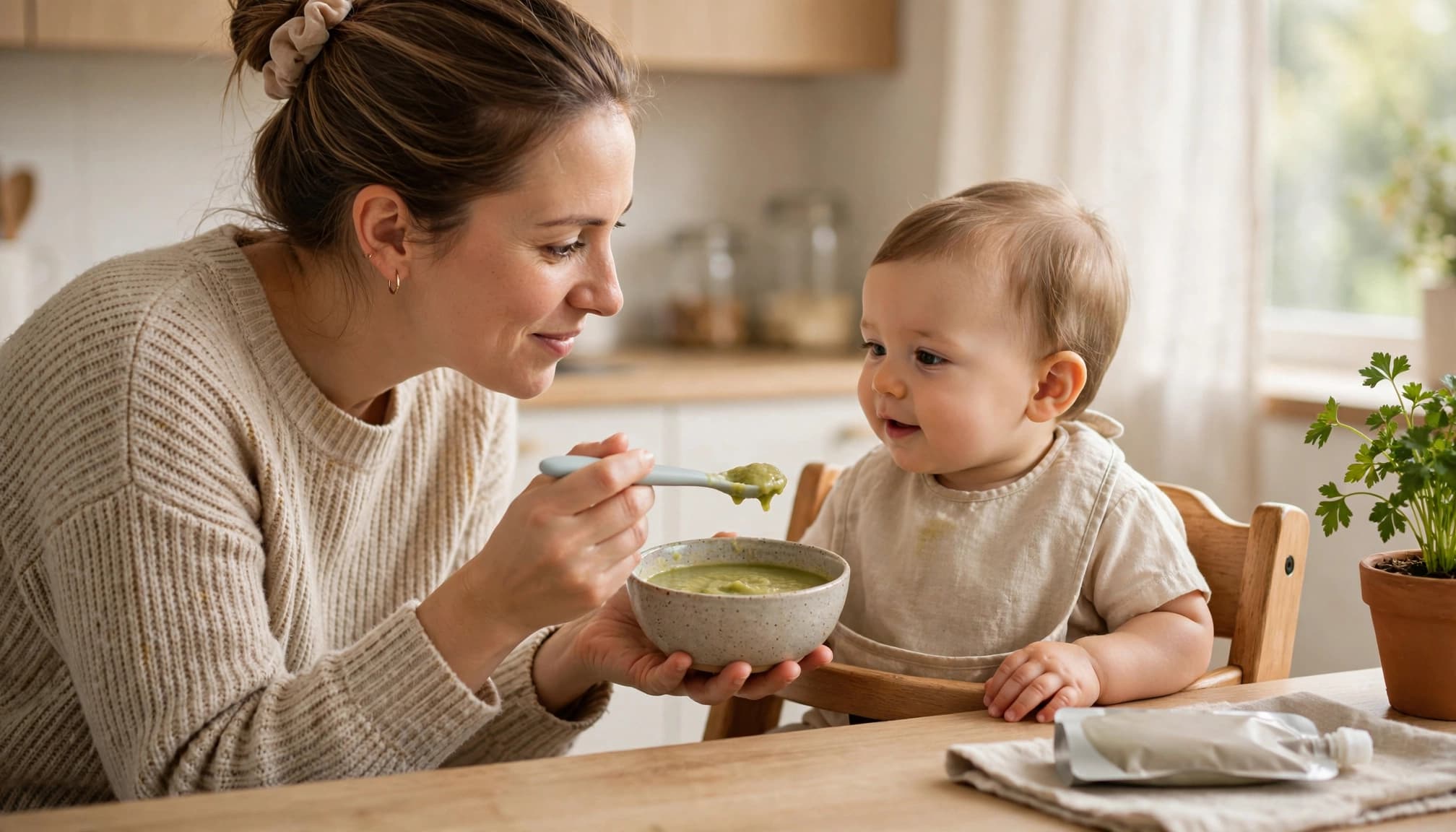
A pouch can belong in your routine, especially when life gets busy. It simply shouldn't carry the entire routine.
The Ingredients Matter More Than the Package
The nutrition in baby food pouches varies widely. A pouch of pureed peas and chicken differs from one built mostly around apple, pear, or mango puree. Both may be safe to eat, yet they give your baby different tastes and nutrients.
Fruit-forward pouches are common because babies tend to enjoy their sweetness. Still, a diet that leans heavily toward sweet purees can make savory foods seem less familiar over time. Continue offering vegetables, beans, eggs, meat, fish, grains, and unsweetened dairy in age-appropriate forms.
Read the label from the ingredient list down
Look at the first few ingredients before focusing on front-of-package claims. Ideally, you should recognize simple foods such as squash, lentils, chicken, spinach, oats, or plain yogurt.
Choose pouches without added sugar when possible. For babies under 12 months, breast milk or infant formula remains the primary drink, and added sugars don't add useful nutrition. Also check for ingredients your child needs to avoid because of an allergy or medical plan.
A short ingredient list is not the only sign of a good option, but it makes it easier to know what your baby is eating.
Check the product and the pouch itself
Inspect the package before opening it. Skip pouches that are swollen, leaking, torn, or past their use-by date. Once opened, follow the storage directions on that specific product.
Food safety is another reason to stay aware of recalls. In 2025, Sprout Organics voluntarily recalled certain 3.5-ounce Sweet Potato, Apple & Spinach pouches because of possible elevated lead levels. That does not mean all pouches are unsafe, but it shows why checking current food recalls is a sensible parent habit.
A pouch with wholesome ingredients can be a good snack or meal component, yet it cannot provide the full range of texture practice babies need.
Why Texture Matters as Your Baby Grows
The CDC recommends introducing foods other than breast milk or formula at about 6 months, when a baby shows developmental readiness. Smooth purees are often easier at the beginning, so pouches can fit that early stage.
Still, smooth food is only the starting point. As your baby develops, meals should gradually include thicker, mashed, lumpy, and finely chopped textures. This progression supports skills that a pouch alone cannot teach.
Start smooth, then move beyond puree
At first, you might offer mashed avocado, blended lentil soup, soft oatmeal, or pureed vegetables. A spoon-fed pouch puree can also work during this phase.
Then begin changing the texture. Mash ripe banana with a fork instead of blending it completely. Leave tiny soft lumps in sweet potato. Serve tender shredded chicken, well-cooked beans lightly mashed, or soft strips of omelet when your baby is ready.
Every baby moves at a different pace. If you have concerns about chewing, swallowing, weight gain, prematurity, or oral-motor development, ask your pediatrician or a feeding specialist for guidance.
Finger foods build confidence at the table
Self-feeding is messy, but it has real value. When babies pick up soft food, bring it to their mouths, and explore it with their hands, they practice coordination and become familiar with how food feels.
Offer safe options such as soft pear slices, ripe avocado wedges, tender broccoli florets, shredded chicken, thin strips of toast, or beans gently flattened with a fork. Modify food for your baby's age and skills.
The USDA advises keeping soft pieces no larger than one-half inch, or serving thin strips and slices. Avoid hard, round, sticky, or small foods that can block the airway, including whole grapes, nuts, popcorn, spoonfuls of nut butter, and coin-shaped hot dog slices.
How to Serve Pouches Safely
Pouch feeding still needs the same care as any other solid food meal. Sit your baby upright in a high chair or another secure feeding seat. Stay with them while they eat, even if they have used pouches many times.
The CDC advises against feeding children while they are lying down, crawling, or walking. For the same reason, avoid handing a pouch to a baby in a reclined stroller, car seat, or while they move around.
Squeezing into a bowl is often the better choice
Feeding directly from a pouch is convenient, but serving it in a bowl gives you more control. Your baby can practice taking bites from a spoon, pause when full, and see the food they are eating.
A bowl also makes it easy to pair puree with other foods. Add a spoonful of bean puree beside soft broccoli, or serve a vegetable pouch with strips of ripe peach. The meal becomes more varied without creating extra work.
If you do offer the pouch directly, hold it yourself for younger babies. Don't prop it, leave it in a crib, or let your child eat while distracted by play.
Follow hunger and fullness cues
A baby may turn away, close their mouth, push food aside, or lose interest when full. Those signals matter more than finishing every last drop in the pouch.
Because pouches are easy to sip, it can be harder to notice how quickly your baby has eaten. Slow the pace, offer small amounts, and let your child decide when they have had enough.
Build an Everyday Routine With Real Foods
Parents don't need to prepare a different meal for every feeding. A few flexible habits can keep fresh food realistic, even during busy weeks.
Start with the foods already on your table, then set aside a portion before adding salt, honey, or spicy sauces. Cook vegetables until soft, mash beans, flake fish carefully, or blend part of a family soup when needed.
Here is one simple way to balance convenience with food practice:
| Feeding moment | A practical option | What your baby practices |
|---|---|---|
| Breakfast at home | Oatmeal with mashed banana | Spoon use and thicker texture |
| Lunch out | A simple pouch plus soft avocado | Familiar food and self-feeding |
| Family dinner | Mashed beans with tender vegetables | Savory flavors and lumps |
| Travel day | Pouch, then a soft snack when seated | Flexible eating routine |
The goal is not to avoid pouches completely. Instead, give your baby frequent chances to eat food that looks and feels different.
Make variety easier with small changes
Rotate ingredients instead of relying on the same fruit blend each day. If your baby loves apple puree, offer cooked apple wedges, pear slices, unsweetened applesauce from a bowl, and savory foods alongside it.
Repeated exposure works better than pressure. Your baby may ignore zucchini several times before trying it. Keep offering a small portion without turning the meal into a battle.
Also remember that babies do not need perfect meals. A week with different colors, textures, proteins, and grains matters more than any single lunch.
When Baby Food Pouches Make the Most Sense
There are plenty of moments when baby food pouches are the practical choice. Keep a few for an unexpected delay, a road trip, a babysitter, or a day when the kitchen is already a mess.
Pouches can also introduce an ingredient your baby has not had before, although offering that food in another form later is helpful. A spinach and lentil puree may be a convenient first taste, followed by soft lentils and cooked spinach at home.
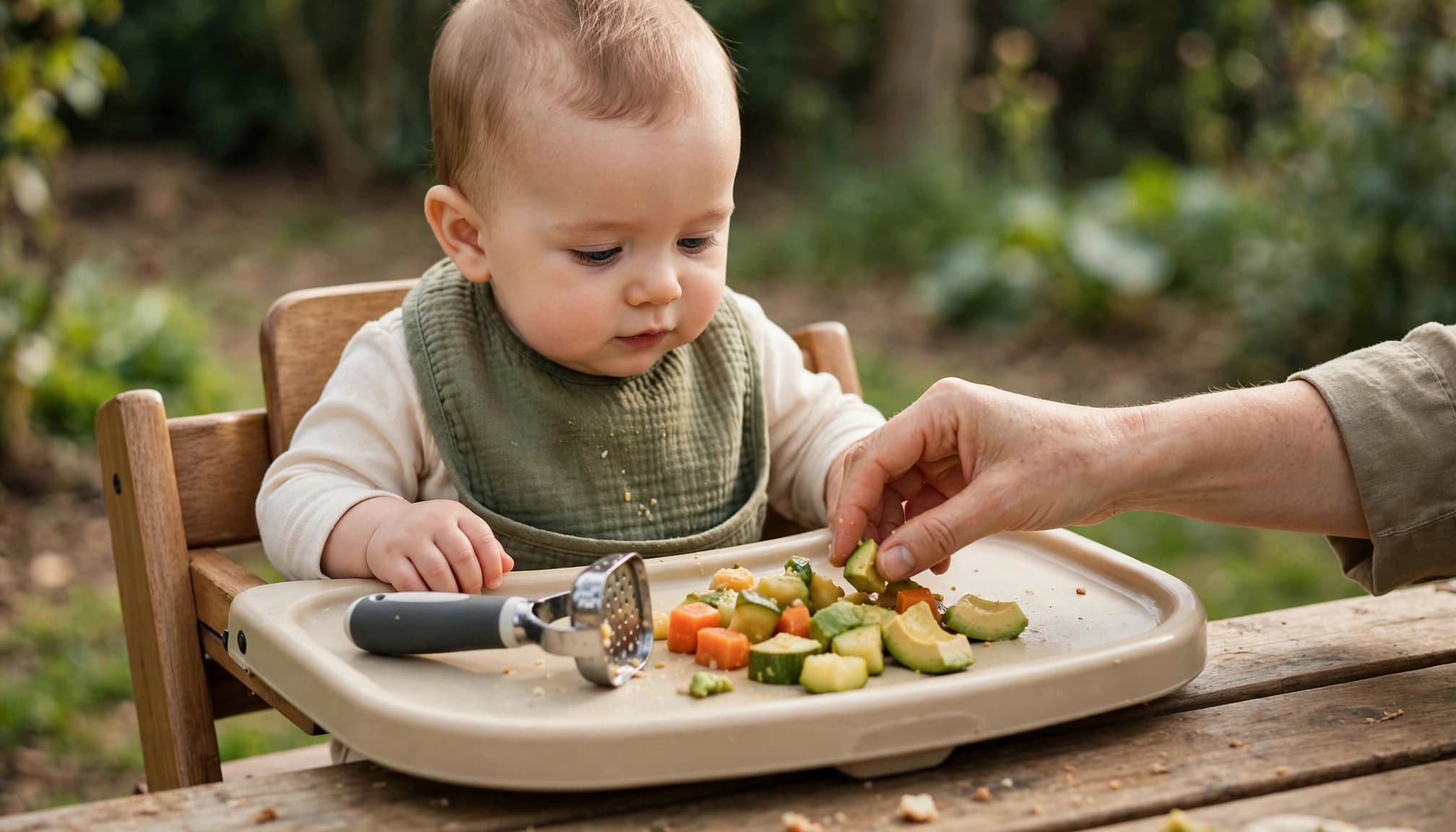
Keep convenience foods in their proper place
If your child eats one pouch during a hectic day, there is no need to worry. Offer a varied dinner or snack later, and continue the usual routine tomorrow.
On the other hand, consider changing course if pouches have become the answer to breakfast, lunch, dinner, and snacks. Add one bowl meal each day first. Then include a soft finger food beside it. Small changes can make a meaningful difference without making feeding feel like another full-time job.
A Healthier Way to Feed on the Go
Baby food pouches are healthy enough for occasional use when you choose simple ingredients and use them safely. However, babies also need spoon practice, varied textures, self-feeding opportunities, and regular exposure to fresh foods.
A pouch should support your day, not define your baby's diet. Variety is the habit that helps your child build comfort with real food over time.
The Wonder Wean helps you mash fresh, unprocessed foods wherever you are, using ingredients from home, a restaurant meal, or a picnic. Keep it in your bag when you want a simple alternative to another packaged puree, and Buy Now to make healthy baby food easier wherever the day takes you.