

Baby Food for Camping Without a Kitchen: Fresh, Simple Meals
A campsite picnic table can feel far from your kitchen when your baby is hungry. But baby food for camping can be as simple as a ripe banana, a clean spoon, and a plan for keeping perishables cold.
You don't need to prepare every meal before you leave. Familiar foods, served in textures your baby already handles, give you room to adapt when naps or weather change. Start by deciding what your baby will eat, then pack only what you can prepare and store safely.
Start with the foods your baby already eats
Camping adds unfamiliar sounds, places, and routines. Mealtime can stay familiar. Choose foods your baby has eaten at home, and keep milk feeds on their usual schedule.
Let feeding skills guide the texture
A ripe banana might work as a smooth mash for one baby and as a soft finger food for another. Use the texture and serving shape your baby already manages. Press a piece between your fingers before serving it; if it needs force to break down, it needs more preparation.
Sit your baby upright for meals and stay with them while they eat. Check every serving for hard pieces, skins, bones, or other bits that don't belong in their food.
Save new foods for home
A camping trip is a poor time to offer several new ingredients. If your baby reacts to a food, you'll want your usual supplies and routine close by.
That doesn't mean meals have to be repetitive. You can pair familiar ingredients in different ways, such as mashed banana with oats or avocado with soft, cooked beans. Introduce and assess those foods at home before relying on them outdoors.
Pack natural baby food for camping with little prep
The easiest ingredients need little work at the campsite. Bring them intact when practical, then prepare a small portion when your baby is ready to eat.
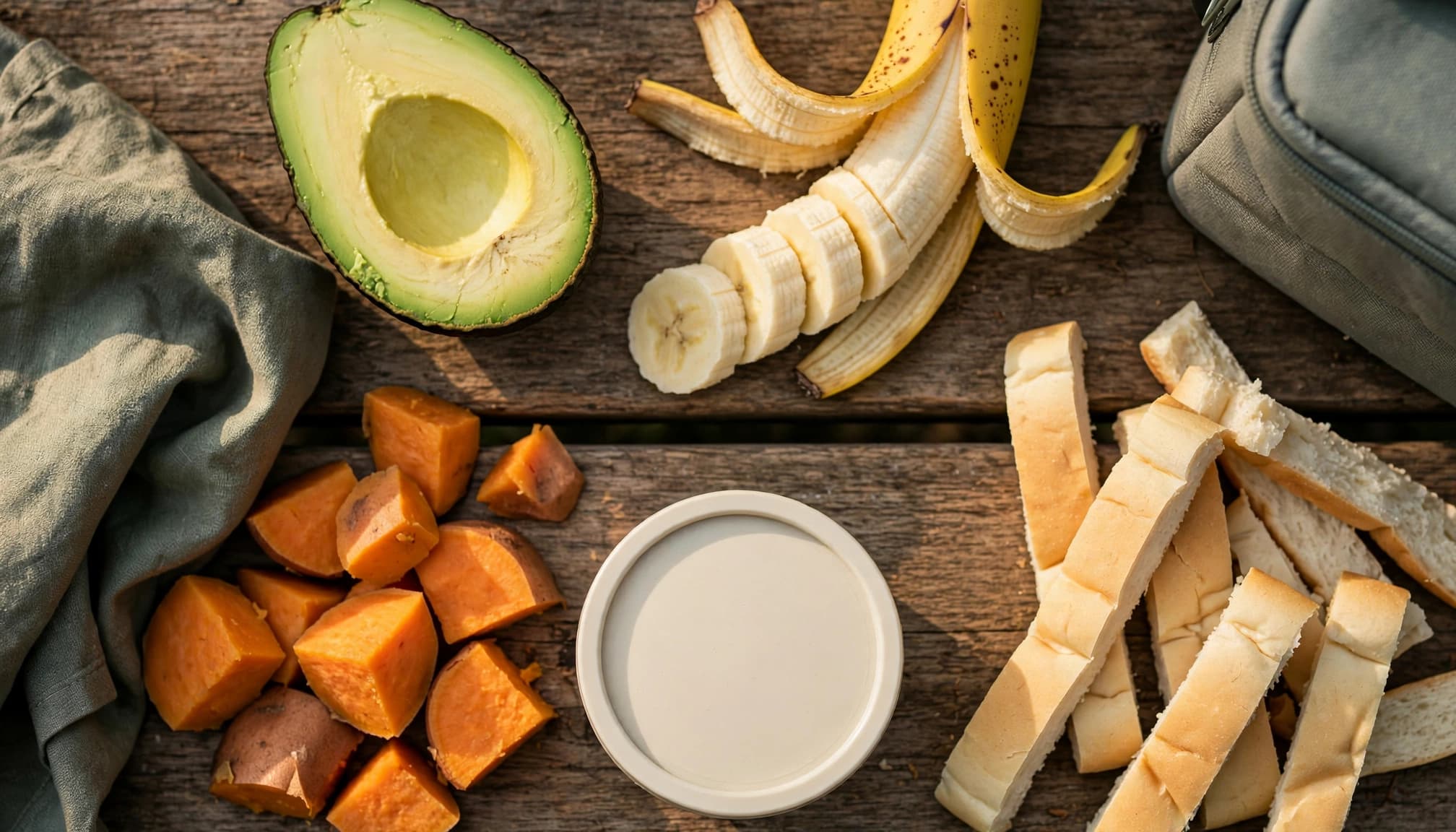
Choose ripe produce you can prepare on the spot
Bananas are easy to peel and mash with a fork. A ripe avocado can become a soft mash with little effort, too. If your baby already eats pear, bring one that is soft enough to prepare in their usual texture.
Keep produce whole until mealtime. Wash it with safe drinking water before cutting or peeling, and use a clean surface and utensils. Once you've prepared a serving, treat it as fresh food rather than leaving it on the picnic table for later.
Keep a simple packaged backup
An unopened container of unsweetened applesauce or another familiar baby food can help when rain makes outdoor preparation difficult. Check the ingredients and follow the package's storage directions, including what to do after opening.
A packaged backup doesn't have to replace fresh food for the whole trip. One or two small portions give you flexibility without filling your bag with jars and pouches. Choose foods your baby can already eat comfortably, rather than assuming a "natural" label tells you enough about the texture or ingredients.
Prepare some ingredients at home
No kitchen at the campsite doesn't mean every food must be raw. Cooking a few familiar ingredients before departure expands your choices, provided you can keep them properly chilled during the trip.
Bring soft vegetables and beans
Cook sweet potato, carrots, or other vegetables until they mash easily. Let them cool, then divide them into small, clean containers. At mealtime, mash a portion further if your baby needs a smoother texture.
Plain, thoroughly cooked beans are another option for babies who already eat them. Mash them well and check for firm skins. Keep sauces and heavy seasoning out of the baby's portion when sharing family food.
Add familiar proteins when you can keep them cold
If your baby eats egg or meat, prepare it fully at home and pack a separate portion for them. At the campsite, check cooked meat carefully for bones, gristle, and pieces that are too firm for your baby's current skills.
These foods need reliable cold storage. If you can't maintain it, leave them off the menu and use ingredients you can safely prepare at mealtime instead. A simple meal that you can handle well beats an ambitious one you can't store safely.
Plan meals around what the campsite allows
A flexible menu saves you from opening every container to find something suitable. Pair one ingredient that needs little preparation with one chilled item, if your cooler setup allows it.
| Meal | Simple combination | At the campsite |
|---|---|---|
| Breakfast | Banana and plain cooked oats | Mash together to your baby's usual texture; keep prepared oats chilled. |
| Lunch | Avocado and soft, cooked beans | Open and mash the avocado when needed; take beans from the cooler. |
| Dinner | Cooked sweet potato and familiar cooked protein | Serve a small chilled portion, checking texture before feeding. |
| Backup | Familiar unsweetened packaged food | Follow its label for storage and use after opening. |
You don't need four different meals every day. Repeating foods your baby likes can make packing and cleanup easier. The useful distinction is what needs chilling and what you can prepare only when it's time to eat.
Plan for the family meal, too. If you're bringing plain, suitable ingredients for everyone, set aside your baby's portion before adding sauces or seasoning. That often takes less space than packing an entirely separate menu.
Keep food cold and feeding gear clean
Camping makes it easy to lose track of a container during a long afternoon. Give chilled baby food its own place in the cooler, and keep the feeding kit where you can reach it without digging through camping gear.
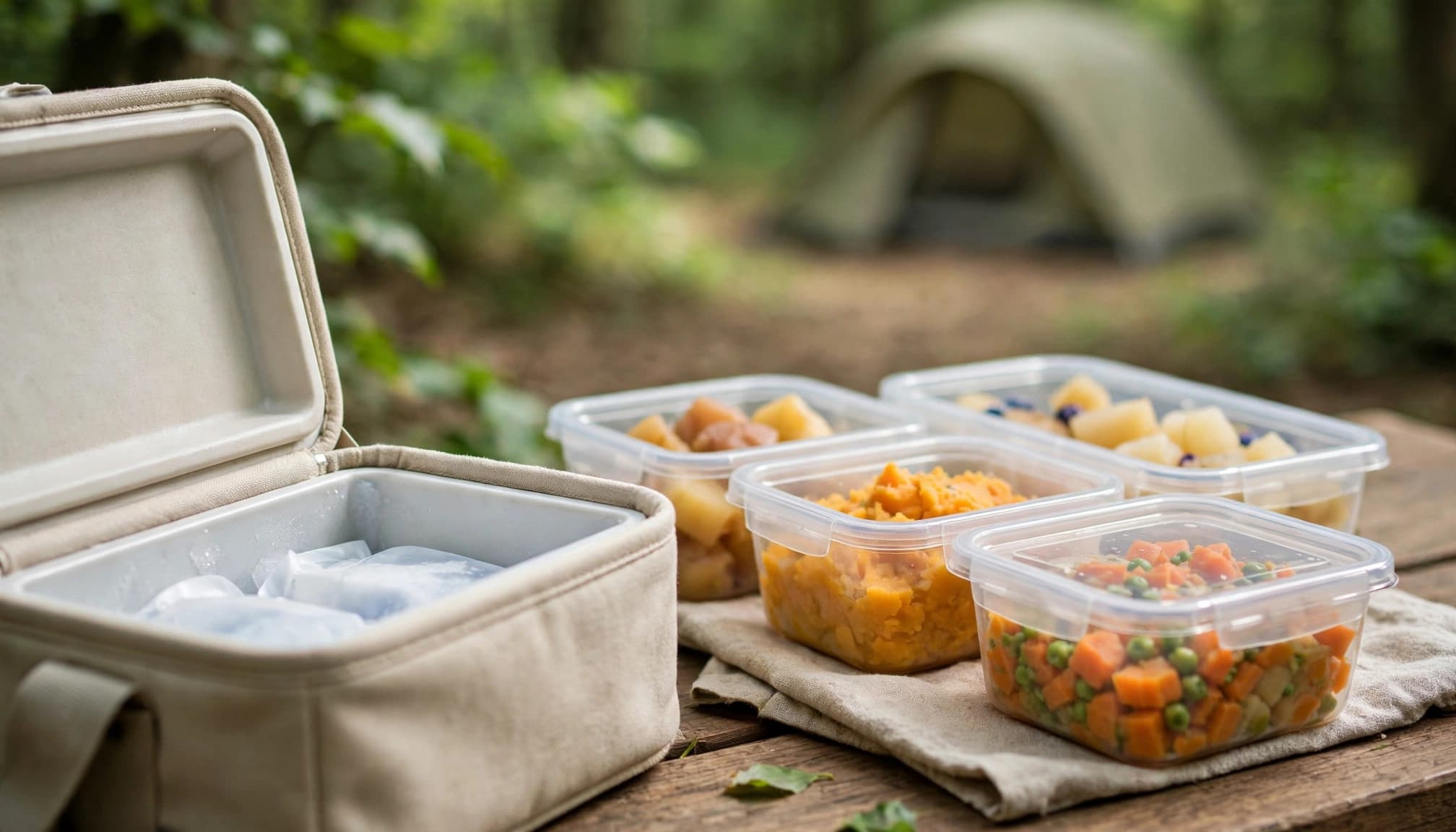
Pack small, sealed portions
Use clean containers with secure lids. Small portions let you take out only what your baby is likely to eat while the rest stays cold. Place perishable food with frozen ice packs, and follow food-safety guidance if you're unsure whether your cooler can keep it cold enough.
Open the cooler only when necessary. Put food back promptly, and don't serve a chilled item if you can't tell whether it has stayed cold. Follow the storage instructions for expressed milk or prepared formula separately from your solid-food plan.
Clean before, during, and after meals
Wash your hands with soap and safe water before handling food. Wash produce and clean the bowl, spoon, and food-preparation tool before use. At a campsite without a sink, bring enough safe water and a way to collect dirty utensils for proper washing.
Spoon a little food into your baby's bowl instead of feeding directly from the main container. Discard what's left in the serving bowl after the meal, especially once the spoon has been in your baby's mouth. Keep used utensils in a separate bag until you can wash them thoroughly.
Make each campsite meal small and manageable
A baby rarely eats according to a camping schedule. Prepare one serving when your baby is ready, rather than mashing fruit in advance and hoping it lasts until lunch.
Set up a clean feeding spot
A small lidded bowl and spoon are enough for many meals. Put your baby in a stable, upright seat, then bring over the food. Keep the serving area away from dirt, insects, and raw ingredients being prepared for the rest of the family.
If you're using a hand-powered masher, start with foods that are already ripe or fully cooked and soft. Check the finished texture before offering it. The tool makes preparation easier, but it doesn't cook food or remove every unsuitable piece for you.
Share a suitable part of the family meal
Camping food can work for your baby when you choose the right portion. Plain, soft-cooked vegetables or a suitable cooked ingredient set aside before seasoning may need only mashing.
Don't rely on whatever happens to be left on a plate. Check how the food was prepared and whether you can store or serve it safely. If it isn't a good fit, use the banana or familiar backup you packed.
Keep the feeding kit light
A separate pouch stops clean spoons from disappearing into a backpack. Pack for the meals you expect, with one modest backup for delays:
- Bring a clean bowl, two spoons, and a washable bib.
- Use small, leak-resistant containers for prepared food.
- Carry safe water, soap, and clean cloths for washing and wiping.
- Keep perishables in a cooler with frozen ice packs.
- Add a sealable bag for dirty utensils and food scraps.
Before leaving home, try fitting the kit beside your regular camping supplies. If it feels bulky, cut duplicate foods before removing anything you need for cleaning or cold storage.
Key Takeaways
- Choose familiar ingredients and textures that match how your baby eats at home.
- Keep bananas or avocados whole until mealtime, and prepare only a small serving.
- Cook vegetables, beans, or proteins ahead only when you can transport them safely.
- Keep perishable food cold, use clean utensils, and discard food left in the serving bowl.
- A simple backup helps when weather or timing disrupts your meal plan.
Camping Baby Food Questions
Can I make baby food at a campsite without electricity?
Yes, if you bring suitable foods and basic feeding supplies. Ripe fruit can be mashed with a clean fork, while properly cooked vegetables can be prepared at home and transported cold. A hand-powered food maker is another option for soft ingredients. Whatever you use, check the final texture before serving it.
What if I can't keep a cooler cold?
Plan around foods you can prepare safely when needed and unopened products whose labels permit your storage conditions. Skip homemade cooked portions and other perishables if you can't keep them cold. If your storage plan changes during the trip, don't guess about food that has warmed up.
Should I introduce a new food while camping?
It's easier to stick with foods your baby already knows. You can offer variety by changing how you pair familiar ingredients. Save first tastes for a time when you can watch for a reaction in your usual setting.
Fresh Feeding Can Fit in Your Camping Bag
A kitchen-free trip calls for a smaller plan, not a separate camping pantry for your baby. Familiar soft foods, a dependable cooler for perishables, and clean serving gear cover the meals you can safely offer.
The Wonder Wean can help you feed your baby healthy foods on the go by mashing ripe fruit or properly cooked ingredients without batteries or electricity. Pack it with your feeding kit, prepare a small portion when your baby is ready, and check the texture before serving. If a compact, hand-powered food maker fits your camping routine, Buy Now.