

Baby Food Daycare: How to Send Fresh Meals Safely
Fresh food at daycare doesn't need to turn drop-off into a second job. A simple baby food daycare routine can keep meals familiar, portable, and easy for caregivers to serve.
The plan is straightforward: choose textures your baby already handles, portion food into labeled containers, keep it cold, and share clear instructions. Before packing anything, confirm the daycare's food and storage policies. Then build the routine around your baby's developmental readiness.
Start With Foods Your Baby Is Ready To Eat
Fresh ingredients matter, but preparation and texture matter too. Your baby's daycare meals should match the skills your baby practices at home.
Match the texture to your baby's skills
Readiness depends on development, not a strict calendar date. Follow guidance from your pediatrician and the daycare when deciding whether to send smooth purees, thicker mashes, or soft pieces.
If your baby still eats smooth food, blend or mash meals until they have a familiar consistency. As your baby manages thicker textures, you can send mashed avocado, soft cooked vegetables, oatmeal, beans, or tender fruit prepared in a form your baby already knows.
Your baby should eat while seated upright and supervised. Avoid hard, round, sticky, or tough foods that don't match your baby's current skills. Whole grapes, popcorn, nuts, raw carrot pieces, and large chunks of food need special attention because they can create choking risks.
Send familiar foods before new ones
Daycare is easier when caregivers know what your baby normally eats. Pack foods your baby has already tried at home, especially during the first weeks of a new routine.
If you plan to introduce a new food or common allergen, talk with your baby's healthcare provider and daycare first. Agree on when and where to offer it, and share any instructions about watching for a reaction. A busy daycare room shouldn't be left to guess how you want a new food introduced.
Create a Baby Food Daycare Packing System
Once you've chosen the food, make the handoff simple. Caregivers should be able to identify each container and understand what to do without opening a long message on their phone.
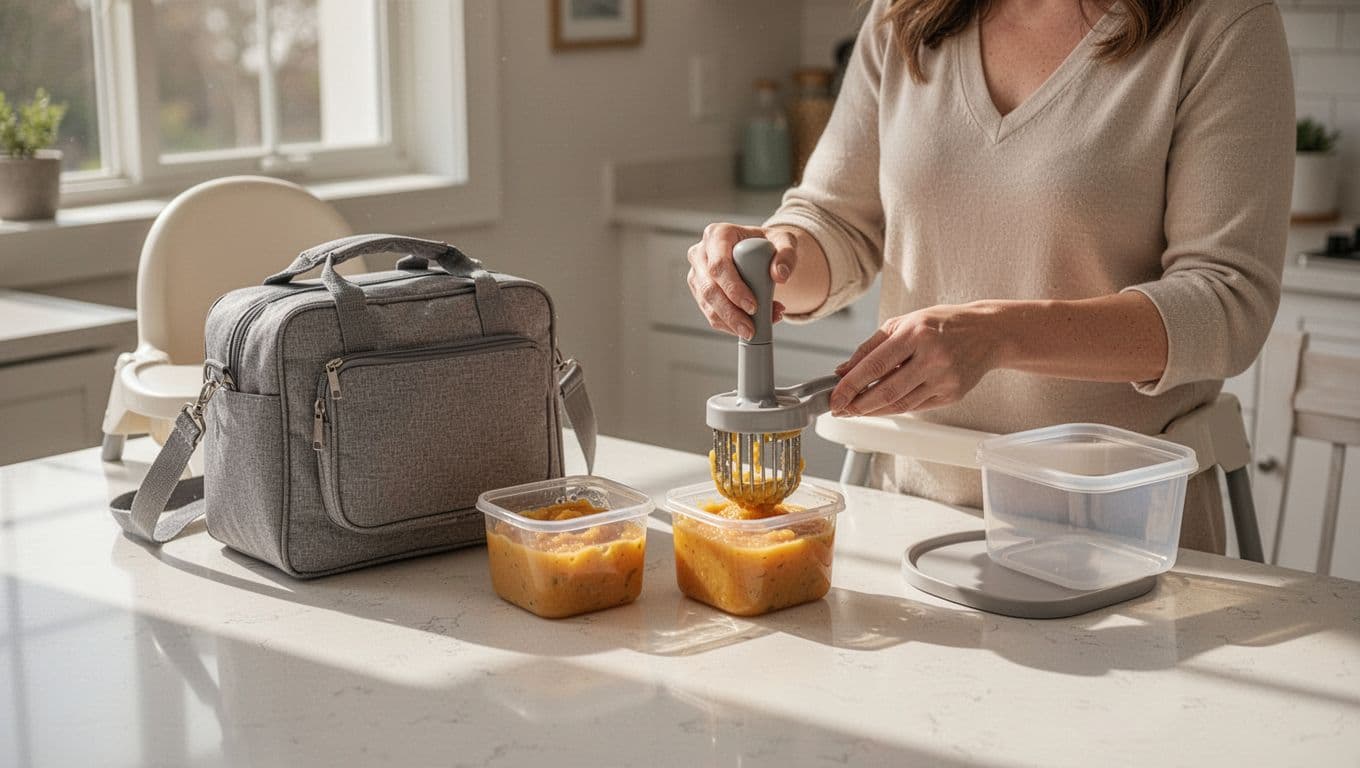
Portion one meal at a time
Use one food-safe, leakproof container for each meal. This keeps breakfast, lunch, and snacks separate and makes it easier for caregivers to serve the amount your baby usually eats.
Start with your baby's normal portion. If your daycare permits extra food, pack a small second portion instead of filling one large container. Your baby may eat differently at daycare because of a new setting, schedule, or level of distraction.
Choose containers that open easily but close securely. Shallow containers cool faster and make it easier to see the food inside. If your baby needs a spoon, bib, or specific bowl, pack those items in the same labeled bag.
Prepare fresh food close to packing time whenever possible. For cooked food, place it in a shallow container, cool it promptly, refrigerate it, and pack it with a cold source before leaving home.
Label more than your baby's name
A clear label prevents mix-ups and answers the caregiver's immediate questions. Include your baby's full name, the date, the meal, the food inside, and any serving instructions required by the daycare.
Add the prepared time if the center requests it. Write whether the food should be served cold, at room temperature, or warmed. If warming is allowed, state whether the food needs to be transferred to another dish first.
A label that says "Tuesday lunch" leaves too much unsaid. Add the food, texture, serving temperature, and any warming instructions.
Use waterproof labels that stay attached when the container becomes cold or damp. Keep a feeding note in the outside pocket of the lunch bag, and update it whenever the food or texture changes.
Keep Fresh Food Cold From Home To Daycare
Temperature control is the part of fresh baby food packing that deserves the most attention. Perishable food should stay cold during the trip and move into the daycare refrigerator soon after arrival.
Use an insulated bag and frozen ice pack
Pack containers inside an insulated lunch bag with a frozen ice pack. Place the cold pack next to the food, rather than leaving it at the opposite end of the bag.
Keep the bag closed during the commute. A warm car, sunny stroller, or long morning errand can raise the food's temperature quickly. In hot weather, use more than one cold source if the daycare's policy allows it.
Cold food should stay at 40°F (4°C) or below. If you cannot keep the food cold, choose a different option approved by the daycare instead of sending a fresh meal in an ordinary tote bag.
Ask what happens after drop-off
Find out where staff store homemade baby food when you arrive. Ask whether they use a shared refrigerator, a classroom refrigerator, or a separate labeled area.
Also ask when caregivers take food out for feeding. USDA food-safety guidance uses a two-hour limit for perishable food at room temperature, or one hour when temperatures reach 90°F (32°C) or higher. Your daycare may use a stricter rule, so follow its written policy.
If a container feels warm or has stayed out too long, don't put it back in the refrigerator for later. Ask the daycare how it handles leftovers, especially food your baby has already eaten from, and follow that policy every time.
Give Caregivers Clear Feeding Instructions
A predictable baby food daycare routine depends on communication as much as containers and ice packs. Caregivers need practical information about serving the food, your baby's cues, and what to report at pickup.

Write a short feeding plan
Keep instructions brief enough to read during a busy shift. For each meal, note the food, texture, serving temperature, and approximate amount. Tell caregivers whether they should stir the food, add nothing, or transfer it before warming.
For example, your note might say:
"Lunch: mashed sweet potato and lentils. Serve cold. Offer slowly, pause for baby's cues, and stop when baby turns away or closes their mouth."
Use language that matches your baby's routine at home. If your baby eats only a few spoonfuls, say so. If your baby holds the spoon independently, include that detail while still following the center's supervision rules.
Agree on updates and leftovers
Ask caregivers to record when your baby ate, how much they offered, and whether your baby accepted the texture. You don't need a detailed report about every bite, but timing and portion information can help you plan the next day's food.
Share the signs you see when your baby is finished, such as turning away, closing their mouth, or losing interest. Ask caregivers to pause rather than pressure your baby to finish.
Before the first drop-off, ask these practical questions:
- Does the center accept homemade baby food?
- Where will staff store it after arrival?
- Can caregivers warm food, and which containers may they use?
- Do they provide spoons and bowls, or should you pack them?
- How do they record meals and return unused food?
- What is the center's policy for allergens and shared eating areas?
Write down the answers. A clear agreement prevents different caregivers from following different routines.
Reduce Morning Work Without Giving Up Fresh Food
Fresh feeding works best when you remove decisions from the busiest part of the morning. A little preparation can help you send safe food without making every daycare day feel like a cooking project.
Prepare components ahead of time
Wash and cook ingredients according to your normal routine, then cool and refrigerate them promptly. You can keep suitable ingredients ready for quick assembly, such as cooked vegetables, soft fruit, plain grains, or beans your baby already eats.
Portion prepared food into clean containers when you have time. Date each container and use the oldest safe portion first. If you freeze food, ask whether the daycare accepts frozen meals and how staff thaw and serve them.
Some foods are easiest to mash close to mealtime. A ripe banana or avocado may work well when prepared at home shortly before leaving, but check how quickly the food changes color and whether the daycare can store it safely.
Keep an approved backup meal
Your baby may refuse a food at daycare that they happily eat at home. A familiar backup can prevent a missed meal, but it should still follow the center's storage rules.
Pack one backup portion only if the daycare has space and permits it. Choose a food your baby already handles safely, and label it as clearly as the main meal. Don't send more food than staff can store or reasonably serve during the day.
When your baby eats less than usual, ask about the day's schedule, naps, mood, and texture. One uneaten container doesn't tell you to change everything. Look for patterns and discuss them with caregivers.
Keep Fresh Feeding Portable With the Right Tool
A daycare routine often begins at home but continues during travel, errands, or an unexpected schedule change. A compact feeding tool can help when you have safe ingredients but no kitchen or electricity nearby.
The Wonder Wean is a hand-powered pocket blender that mashes soft food on the spot without electricity. You can use it with suitable ingredients already available at home, in a restaurant, at a park, or while traveling. For daycare, use it only if the provider permits personal feeding tools and can follow its cleaning, storage, and food-handling rules.
Conclusion
Fresh baby food at daycare becomes manageable when every step has a clear place. Match the texture to your baby's readiness, pack separate portions, label each container, keep food at 40°F (4°C) or below, and give caregivers instructions they can follow quickly.
A good baby food daycare system should support your family's routine rather than add pressure to it. Once the plan works at home, repeat the same process for daycare, travel, and busy days away.
When you need to prepare healthy, soft food away from your kitchen, the Wonder Wean can help you mash appropriate ingredients without electricity. It gives you more control over texture while you're on the go, and you can Buy Now if it fits your family's feeding routine.