

Whole-Food Baby Meals for Constipation Relief After Six Months
Starting solids can change a baby's poop almost overnight. Color, smell, and frequency often shift, but hard stools and painful pooping deserve closer attention. Gentle baby constipation meals can add more fiber and moisture to a baby's menu without relying on processed foods.
For babies six months and older, the goal is not to force a bowel movement. Offer familiar milk feeds, age-appropriate water, and soft whole foods gradually. Small changes often give a little tummy time to settle.
Tell Normal Solid-Food Changes From Constipation
A baby who once had loose, frequent breastfed stools may poop less often after solids begin. Stool can also become thicker, darker, and more strongly scented. Those changes alone are usually normal.
Constipation is more about texture and discomfort than a number of days between dirty diapers. Watch how your baby acts when they poop.
Signs that point to constipation
Hard, dry pellets are a common sign. Your baby may strain for a long time, turn red, cry, or seem uncomfortable when passing stool. A firm belly, reduced appetite, or streaks of bright red blood from a small anal tear can also happen with hard poop.
Brief grunting can be normal, especially for a young baby still learning to coordinate their muscles. However, repeated distress with hard stools is different from ordinary effort.
When to call the pediatrician
Call your child's pediatrician promptly if you see blood in the stool, vomiting, weight loss, severe belly pain, a swollen abdomen, poor feeding, or unusual sleepiness. Get medical advice if constipation continues despite food and fluid changes.
The American Academy of Pediatrics also flags persistent constipation with concerning symptoms for medical review. Don't use laxatives, suppositories, fiber supplements, or juice unless your pediatrician tells you to.
A baby can poop less often after starting solids and still be fine. Hard stools that hurt are the change that needs attention.
Baby Constipation Meals Built With Soft Whole Foods
The most useful baby constipation meals combine a fiber-containing fruit or vegetable with a familiar soft food. The AAP lists peas, beans, apricots, prunes, peaches, pears, and plums as high-fiber foods to add to baby foods.
Start with ingredients your baby has already tolerated. A sudden large serving of fiber can cause gas and extra discomfort.
Fruit options with a gentle texture
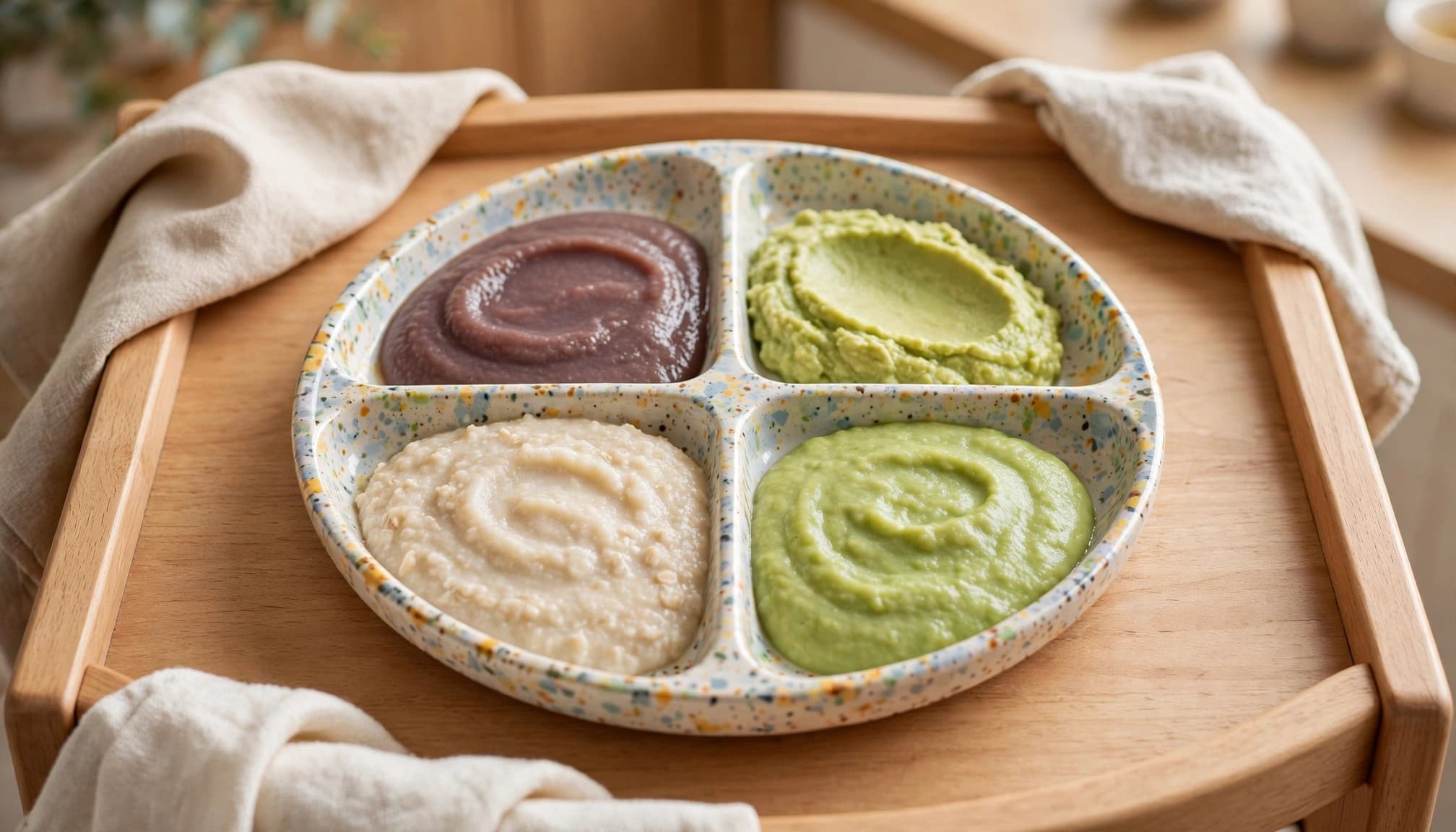
Ripe pear, peach, plum, and prune can work well when peeled, cooked if needed, and mashed or pureed. Prunes have a strong flavor, so stirring a small amount into oatmeal or mashed pear can make them more familiar.
Try these simple combinations:
- Mashed ripe pear with plain oatmeal thinned to your baby's usual texture.
- Warm stewed peach, cooled and mashed with full-fat plain yogurt if dairy is already established.
- Prune puree stirred into mashed sweet potato.
- Soft avocado mashed with pear for a smooth, mild spoonable meal.
Avoid adding sugar, syrup, or honey. Honey is unsafe for babies under 12 months.
Vegetables, beans, and grains add variety
Cooked peas, lentils, beans, spinach, and sweet potato bring fiber to meals. Blend, mash, or press them until the texture matches your baby's eating skills. For early eaters, remove tough skins from beans and blend them smooth.
Oatmeal is another practical base. Choose plain oats rather than sweetened baby cereal or flavored packets. As your baby gains experience with texture, offer thicker mashed meals or very soft, graspable pieces under close supervision.
Add Fiber Slowly Instead of Changing Every Meal
When poop becomes hard, it's tempting to serve prunes at breakfast, lunch, and dinner. That approach can backfire if your baby isn't used to high-fiber foods. Their digestive system needs time to adjust.
Begin with one fiber-rich addition each day. Keep the rest of the meal familiar, then watch for comfort, appetite, and stool texture over several days.
A simple pace for new foods
Offer a small serving of mashed pear or peas alongside a usual meal. If your baby handles it comfortably, repeat it the next day or introduce another soft option later in the week.
This slower approach also helps you notice a possible food reaction. If your baby develops hives, repeated vomiting, facial swelling, wheezing, or severe diarrhea after a food, seek urgent medical care.
Balance matters more than a single "magic" food
No fruit works as an instant cure. A menu with oats one day, lentils another day, and soft fruits through the week is more useful than relying on one ingredient.
For example, a day of baby constipation meals might include oatmeal with pear at breakfast, mashed lentils with sweet potato at lunch, and a small prune and peach puree with dinner. Keep portions modest and follow your baby's hunger and fullness cues.
Keep Milk Feeds and Offer Water With Solids
Breast milk or infant formula remains the main source of nutrition through your baby's first year. Continue usual feeds while solids become part of the day. Cutting back on milk to make room for extra solids can leave a baby hungry and may not help constipation.
Water supports the shift to solid foods
Once your baby is six months old and eating solids, offer small sips of plain water from an open cup or straw cup with meals. Water is the main drink to emphasize alongside food, according to NHS guidance for children with constipation.
Your baby doesn't need large amounts. Let thirst, wet diapers, and your pediatrician's advice guide you. Breast milk or formula should still make up most of their fluid intake.
Skip sugary drinks and don't make juice a routine constipation remedy. Even though some clinical resources discuss juice in limited situations, it should only be used if your pediatrician gives you an amount and plan.
Build an unhurried meal rhythm
A rushed baby often eats less and becomes frustrated. Sit your baby upright in a stable high chair, stay within arm's reach, and allow enough time to eat slowly.
Offer food when they are alert but not overly hungry. Regular meals, milk feeds, and chances to move freely on the floor when awake can support a comfortable daily rhythm.
Make Every Constipation-Friendly Meal Safe to Eat
Healthy ingredients still need the right texture. A six-month-old may manage a smooth puree, while an older baby who has practiced chewing can handle mashed food with soft lumps or large, soft pieces.
Always match the meal to your baby's current skills, not just their age. Sit with your baby for every meal and avoid eating in a car seat, stroller, or reclined position.
Use soft textures and safe shapes
Steam firm produce until it squishes easily between your fingers. Peel fruit skins that stay tough, remove pits and seeds, and mash beans well. Thin sticky foods such as nut butter into oatmeal or yogurt, rather than serving a thick spoonful.
Avoid whole grapes, nuts, popcorn, hard raw apple, firm carrot coins, and chunks of meat or cheese. Whole nuts and seeds are choking hazards for young children. If you offer nut products after introducing allergens safely, use smooth nut butter in a thin layer or stirred into another food.
Watch for foods that crowd out fiber
A meal of mostly refined crackers, sweetened cereal, or packaged snack foods doesn't give the same fiber variety as fruit, vegetables, beans, and oats. These foods don't need to be forbidden, but they shouldn't replace regular whole-food meals.
If a new food seems to make stools noticeably harder, pause it for a few days and offer familiar fiber-rich choices instead. Discuss a repeated pattern with your pediatrician before making major restrictions.
Fresh Baby Constipation Meals Away From Home
Outings don't have to mean skipping the foods your baby eats well at home. A ripe banana, a soft pear, cooked oats in a small container, or leftover steamed vegetables can become a quick meal with basic preparation.
Pack foods safely, keep perishable items cold, and discard leftovers that have been sitting out too long. At a restaurant, plain steamed vegetables, avocado, oatmeal, or soft fruit may be easier choices than heavily salted or sweetened options.
Keep the routine flexible
Travel days can change sleep, feeding times, and bowel habits. Offer milk feeds as usual, bring water for meals, and use the same soft textures your baby recognizes. Familiar food can make an unfamiliar day feel calmer.
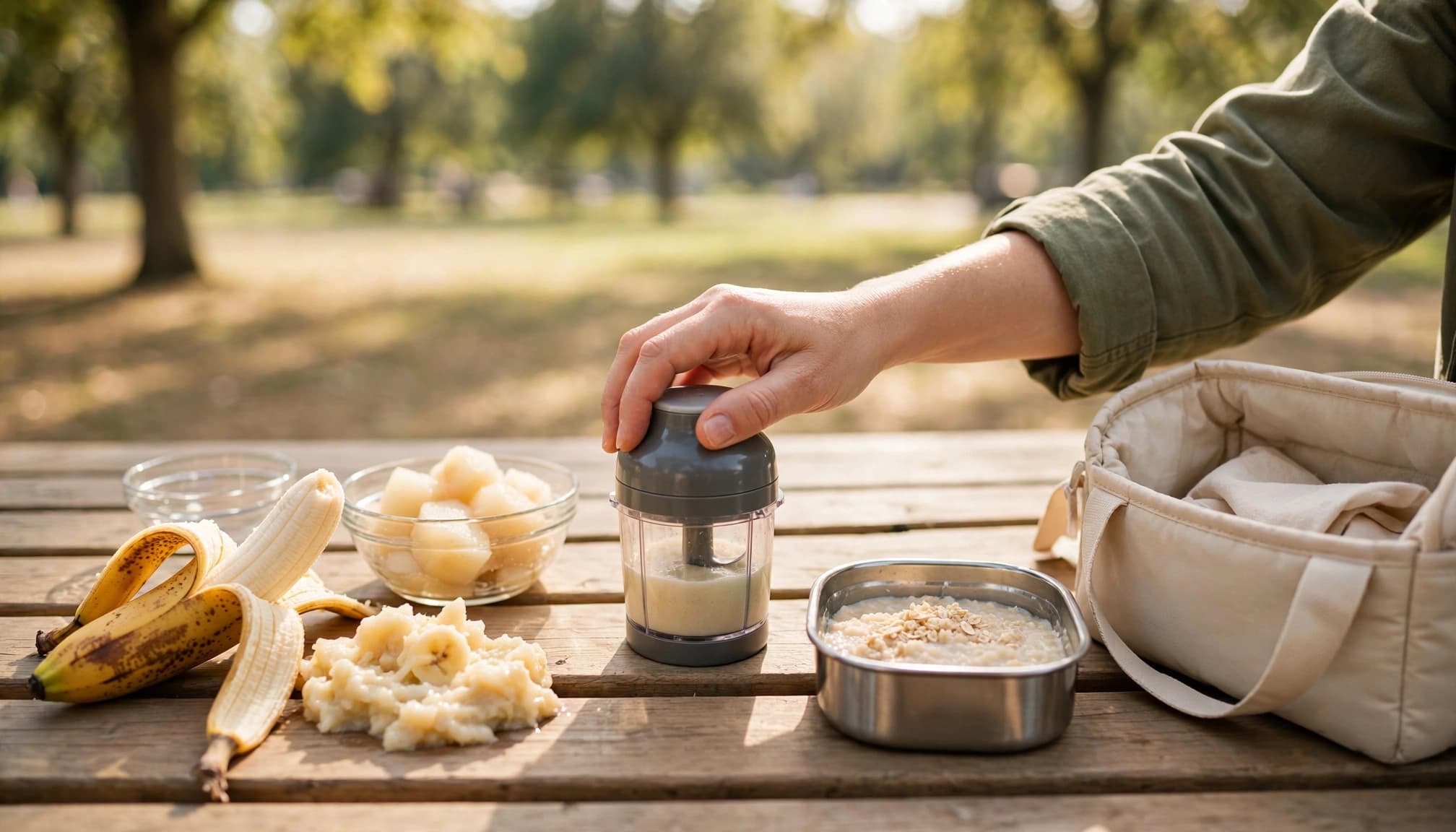
A compact hand-powered food masher can also help when fresh food is available but a blender isn't. Mash a soft pear, cooked vegetables, or oats into the texture your baby already handles, then serve it promptly.
A Gentle Path Back to Comfortable Poops
Hard, painful poop after solids calls for simple, steady changes: keep milk feeds going, offer water with meals, and build in soft fruits, vegetables, beans, and oats over time. The best baby constipation meals are familiar foods prepared safely and offered without pressure.
For parents who want fresh options outside the kitchen, the Wonder Wean can help mash soft, healthy foods when you're out with your baby. Its compact hand-powered design lets you prepare familiar ingredients on the spot, and you can Buy Now when it fits your family's feeding routine.