

Healthy Baby Breakfast Ideas Without Added Sugar
Breakfast with a baby can feel like a small daily puzzle. You want food that is nourishing, quick to prepare, and easy for little hands or new eaters to manage.
The good news is that baby breakfast ideas do not need sweetened cereal, flavored yogurt, or pouches to taste good. Ripe fruit, vegetables, grains, eggs, and plain dairy already offer plenty of flavor, including natural sugars that are safe in age-appropriate portions.
Start with simple foods, watch your baby's cues, and let breakfast grow with their skills.
Baby Breakfast Ideas That Start With Real Food
Added sugar is any sugar put into food during processing or preparation. It appears in many baby snacks, breakfast bars, flavored oatmeal packets, sweetened yogurt, and some store-bought purees.
Naturally occurring sugars are different. Bananas, berries, pears, plain milk, and unsweetened yogurt contain sugars alongside nutrients such as fiber, vitamins, protein, or fat. These foods can be part of a healthy breakfast.
Keep the ingredient list short
Plain oats, full-fat plain yogurt, eggs, avocado, beans, sweet potato, and ripe fruit are reliable starting points. A meal doesn't need to look elaborate to offer good nutrition.
When buying packaged foods, check for names such as cane sugar, syrup, fruit juice concentrate, honey, or malt. "No added sugar" is helpful, but the ingredient list still tells the fuller story.
Make breakfast filling, not sugary
Pairing a carbohydrate with protein or fat helps make a small meal more satisfying. Try oatmeal with nut butter thinned into it, mashed avocado with egg, or plain yogurt with soft fruit.
Babies often eat a few bites one morning and much more the next. Offer a small portion first, then add more if they remain interested.
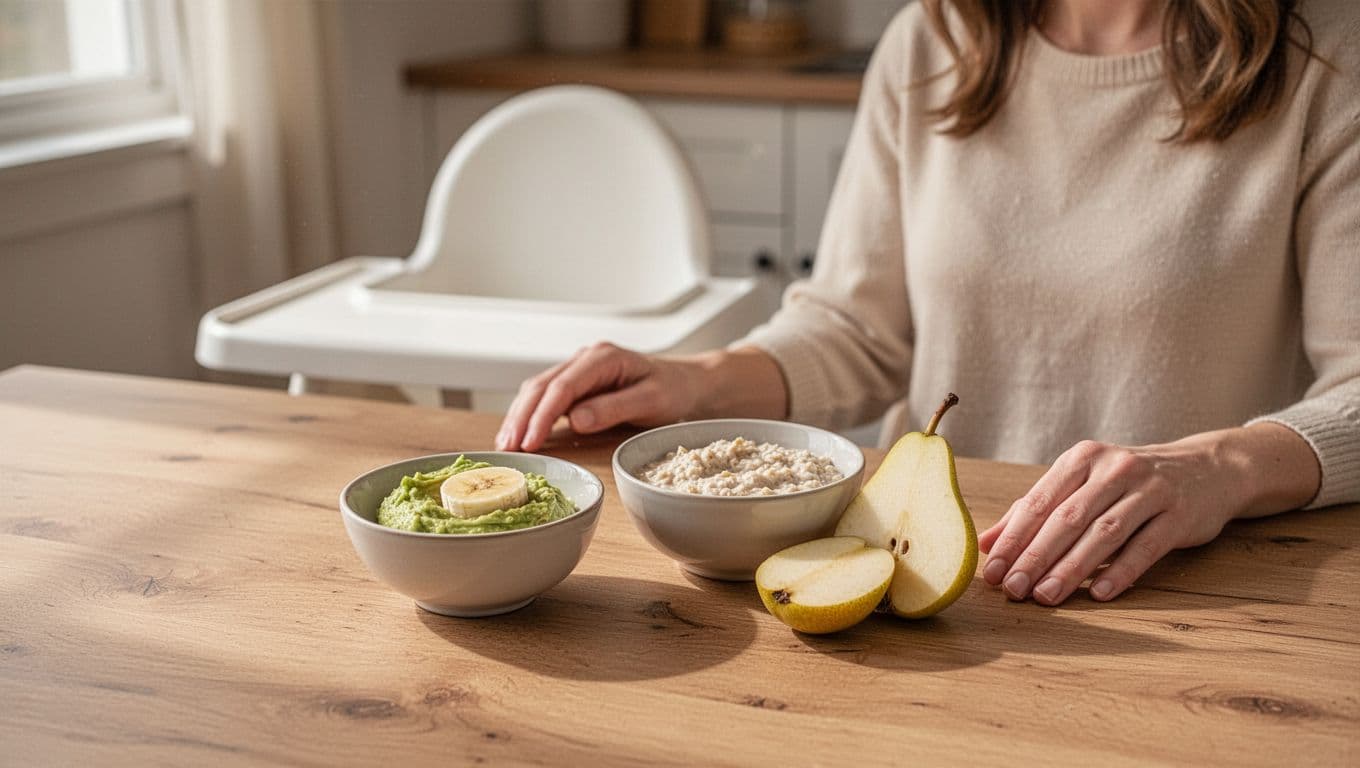
Breakfast Textures for Babies Starting Solids
Many babies begin solids around 6 months when they can sit with support, control their head and neck, and bring food to their mouth. Texture matters as much as the ingredient.
At first, aim for smooth or thick mashed foods that stay on a pre-loaded spoon. As your baby gains experience, gradually offer lumpier mashes and soft finger foods.
Smooth breakfasts for early eaters
Plain oatmeal cooked until soft is an easy base. Stir in mashed banana, cooked apple, pear puree, or a little breast milk or prepared formula to loosen the texture.
Other gentle options include:
- Mashed avocado with breast milk, formula, or water stirred in until creamy.
- Plain whole-milk yogurt mixed with finely mashed ripe peach or banana.
- Pureed sweet potato with a spoonful of smooth, unsweetened peanut butter thinned well.
- Soft scrambled egg mashed with avocado for a thicker, savory meal.
Avoid relying on fruit alone. Fruit is nutritious, yet a little fat or protein often keeps the meal more balanced.
Let baby set the pace
Place the spoon near your baby's hand, or offer a loaded spoon if they want to self-feed. Some babies accept spoon-fed mash at first, while others prefer graspable food.
Mess is part of learning. A washable mat, a small open cup of water, and a relaxed pace can make breakfast easier for everyone.
Baby Breakfast Ideas for 9 to 12 Months
By about 9 months, many babies can handle thicker textures and soft pieces. Keep watching their individual skills, because age is only a guide.
The best baby breakfast ideas at this stage invite practice without turning the meal into a safety gamble. Foods should squash easily between your thumb and finger.
Soft finger foods for practice
Offer ripe banana in a large section with part of the peel left on for grip. Quarter ripe strawberries lengthwise, flatten blueberries, and cook apple or pear slices until very soft.
Toast can work too. Lightly toast bread, then spread it with mashed avocado, smooth nut butter thinned with water, or unsweetened ricotta. Cut it into two-finger-width strips that baby can hold.
Soft omelet strips are another useful option. Cook eggs fully, skip added salt, and slice the omelet into broad pieces. Add finely chopped cooked spinach or grated zucchini if your baby already handles those foods well.
Familiar foods still count
You don't have to retire purees once finger foods appear. Serve a thick mashed food alongside a soft strip of egg or toast. This gives your baby different ways to eat without overwhelming the plate.
A baby-led approach, spoon-feeding, or a combination can all work. Responsive feeding means offering suitable food and allowing your baby to decide whether and how much to eat.
Build a Balanced Breakfast With Protein, Fat, and Iron
Babies grow quickly, so breakfast benefits from more than sweet fruit. Iron-rich foods matter after about 6 months, when the iron stores babies are born with begin to decline.
Eggs, beans, lentils, meat, fish, tofu, iron-fortified infant cereal, and nut butters can all fit into breakfast. Serve plant-based iron foods with vitamin C-rich fruit or vegetables, such as strawberries, kiwi, tomato, or cooked broccoli, to support iron absorption.
Easy combinations that make sense
These pairings are simple enough for a weekday morning:
| Breakfast base | Add protein or fat | Add fruit or vegetable |
|---|---|---|
| Plain oatmeal | Thinned peanut butter | Mashed berries |
| Mashed sweet potato | Flaked salmon | Soft cooked broccoli |
| Plain yogurt | Ground walnuts or seed butter | Mashed peach |
| Egg strips | Avocado | Quartered strawberries |
| Mashed lentils | Olive oil | Cooked pear |
A bowl of oatmeal with banana is fine. However, adding a little seed butter or yogurt makes it more substantial.
Fruit can sweeten a meal naturally, but it doesn't need to carry breakfast on its own.
Introduce allergens earlier and calmly
Common allergens include peanut, egg, dairy, wheat, sesame, soy, fish, and shellfish. Introduce them in safe forms when your baby is well and you can observe them.
For peanut, use smooth peanut butter thinned with water, breast milk, formula, or mixed into oatmeal. Never offer a spoonful of thick nut butter. If your baby has severe eczema or a known egg allergy, ask their clinician about peanut introduction first.
No-Added-Sugar Breakfasts You Can Prep Ahead
A few prepared basics can make busy mornings less frantic. Cooked oats, soft vegetables, and fruit mashes hold well in the refrigerator when stored safely.
Keep meals plain during prep, then add flavor through ripe produce, herbs, or a small amount of cinnamon. Cinnamon is fine in food, but skip sugar, syrups, and sweetened toppings.
Batch-cook small portions
Make plain oatmeal or quinoa, then divide it into small covered containers. Refrigerate cooked food within two hours and use refrigerated leftovers within three to four days.
You can also freeze single portions of unsweetened apple puree, mashed sweet potato, or cooked pear. Silicone trays work well. Once frozen, move portions to a labeled freezer container and thaw in the refrigerator overnight.
Reheat and serve safely
Warm food until hot, then stir and let it cool before serving. Test the temperature yourself, because microwaves can leave hot pockets.
Discard food left in your baby's bowl after the meal. Saliva introduces bacteria, so it is better not to refrigerate and reuse those leftovers. Keep the untouched portion in a separate container.
For more everyday ideas around fresh, simple meals, explore the Wonder Wean approach to baby food.
Choking Safety at Breakfast
A baby can gag while learning to move food in their mouth. Gagging is common and noisy. Choking is often silent and needs immediate action.
Sit with your baby throughout the meal in an upright high chair. Avoid feeding in a car seat, stroller, recliner, or while crawling around with food.
Change risky foods before serving
Modify common breakfast foods before they reach the tray:
- Flatten blueberries, grapes, and cherry tomatoes, then cut them into small pieces.
- Cook apple and pear until soft instead of serving firm raw slices.
- Spread nut or seed butter thinly, or thin it into a mash.
- Grate or finely chop hard raw vegetables.
- Remove pits, seeds, tough peels, bones, and fish skin.
Whole nuts, popcorn, hard chunks of raw apple, sausage coins, and sticky spoonfuls of nut butter are choking hazards. Keep meals calm and avoid distractions so you can watch how your baby manages each bite.
Honey waits until after the first birthday
Do not give honey to babies under 12 months, even if it is baked into food or stirred into warm cereal. Honey can contain spores that cause infant botulism.
Also skip added salt and sweeteners. Babies don't need them, and their taste preferences are still taking shape.
Healthy Breakfasts Away From Home
Natural food can travel well when you pack a small cooler bag, spoon, bib, and easy ingredients. A ripe banana, avocado, plain yogurt kept cold, soft-cooked oats, and pre-cooked egg strips are practical choices.
At a cafe or family breakfast, you may be able to use plain oatmeal, scrambled egg without salt, avocado, banana, or steamed vegetables. Ask for food without sauces, syrup, or added seasoning.
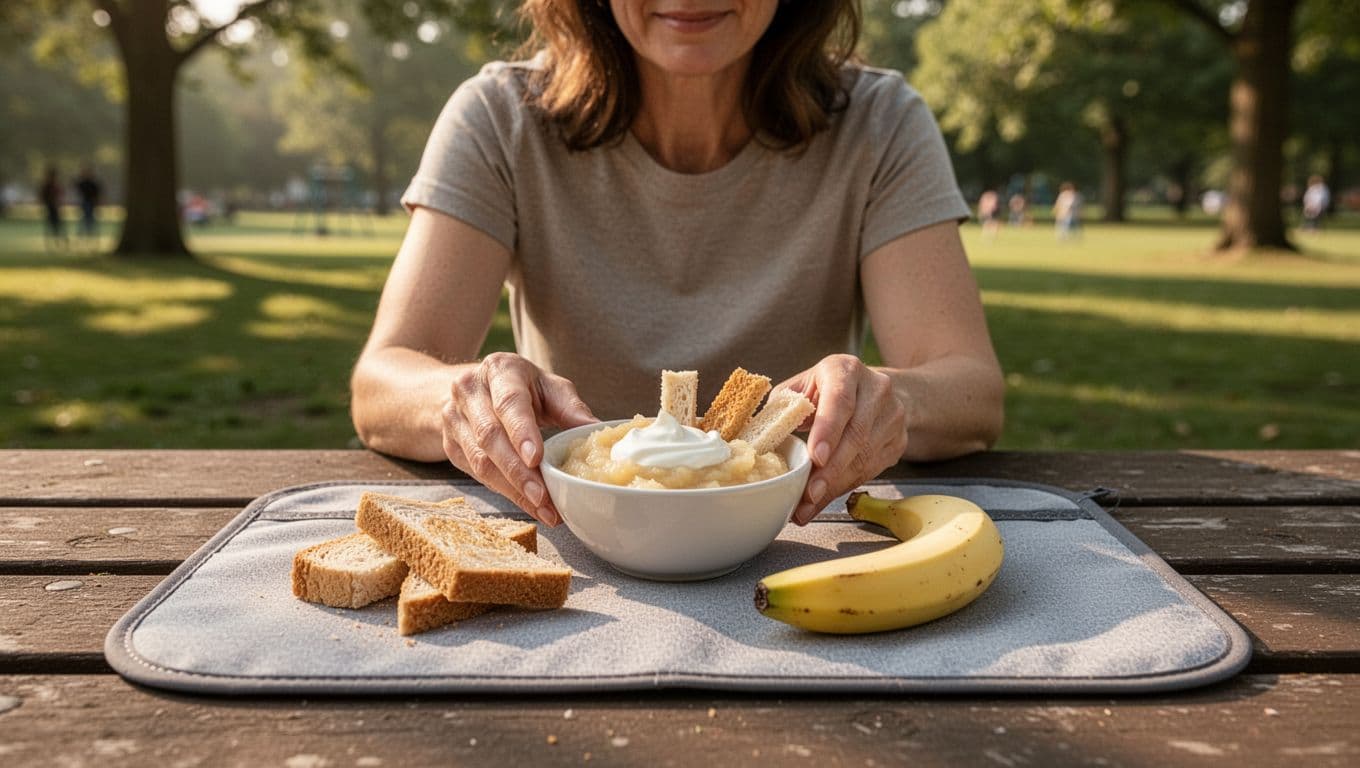
Use what is already on the table
A ripe pear can become a soft mash. Avocado needs only a fork. Warm cooked vegetables or beans can be pressed into a texture your baby can handle.
That flexibility helps when you are visiting relatives, eating out, or spending the morning at the park. It also means you can offer familiar food instead of relying on sugary convenience snacks.
A Healthier Morning Starts Small
The most useful baby breakfast ideas rely on familiar whole foods, suitable textures, and a little preparation. Plain oats, eggs, avocado, yogurt, iron-rich foods, and ripe fruit offer more than enough variety without added sugar.
Your baby's appetite will shift from day to day. Keep offering balanced food without pressure, and let repeated exposure do its quiet work.
When breakfast happens away from home, the Wonder Wean lets you mash fresh foods wherever you are. Keep a simple feeding routine in your bag, and Buy Now when you want an easy way to serve healthy baby food on the go.