

Healthy Baby Beach Meals That Stay Simple and Safe
A beach day can turn lunch into a puzzle: your baby is hungry, the sand is everywhere, and the food you packed is getting warm. Simple ingredients help, but the right texture and a cold cooler matter just as much.
The easiest baby beach meals use familiar foods your child can already manage. Pack small portions, prepare soft foods close to mealtime, and choose a shaded place where you can sit together.
Match the Meal to Your Baby's Eating Skills
Beach food should fit the way your baby eats at home. A change of setting is enough excitement without introducing several unfamiliar foods or a new texture.
For babies learning to eat solids
Smooth mashed banana, avocado, or well-cooked sweet potato can make an easy serving. If your baby prefers a thicker mash, use a fork to leave a little texture. Keep it consistent with foods they've already handled comfortably.
You can also pack plain, iron-fortified infant cereal and prepare it as directed when it's time to eat. Use clean water or the milk your baby normally has, following the cereal's instructions. Pack only the amount you expect to serve so the rest stays dry and clean.
For babies ready for finger foods
Offer foods soft enough to squash easily between your fingers. Tender sweet potato, ripe avocado, and very soft cooked vegetables can work when prepared in a size and shape your baby manages well.
Age alone doesn't tell you which pieces are safe. Watch how your baby handles food at home, and ask your pediatrician about texture if you're unsure. At the beach, serve finger foods while your baby sits upright and you can watch every bite.
Baby Beach Meals Made With Everyday Food
A small meal doesn't need a separate recipe. Choose one or two familiar foods, then add an iron-rich ingredient when it fits your baby's usual routine. Plain ingredients also make it easier to spot what needs refrigeration.
Mash fruit and vegetables near mealtime
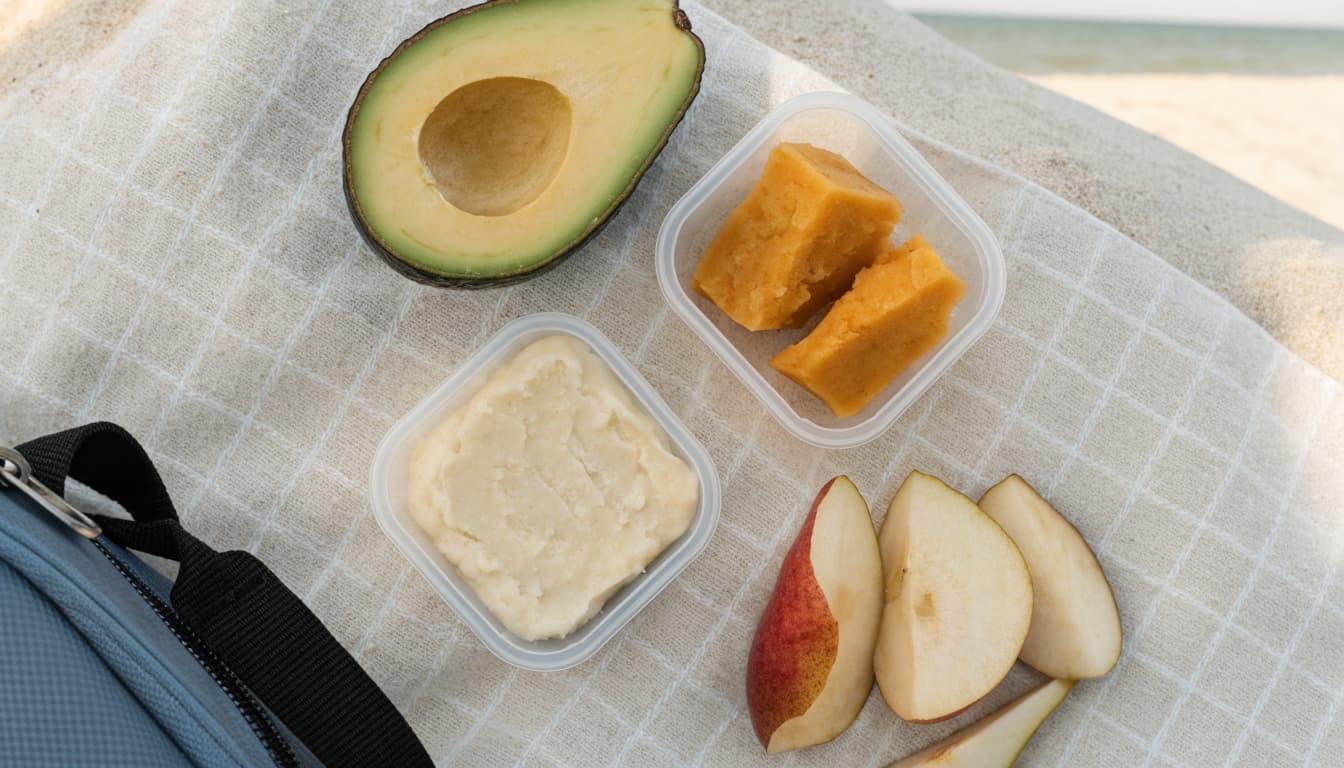
A whole banana comes with its own peel and needs no cooler before you open it. A whole, ripe avocado is similarly convenient; cut it when you're ready, then mash a small serving in a clean bowl. Both spare you from carrying a container of prepared fruit through the heat.
If you want to bring cooked sweet potato, carrots, or broccoli, cook them until soft at home. Cool them promptly, then pack them cold. Mash a portion at the beach or offer appropriately prepared soft pieces to a baby who can manage them.
Firm raw apple and carrot are poor choices for a young eater. Cooking them until soft changes the texture and makes them easier to serve.
Add familiar iron-rich foods
Mashed lentils or beans, finely prepared cooked chicken, fully cooked egg, and iron-fortified infant cereal give you options beyond fruit. Pack cooked foods in the cooler, and check beans for firm pieces or tough skins before serving.
For example, pair chilled mashed lentils with soft sweet potato. Another simple meal is fully cooked egg with avocado, prepared in the texture your baby already eats. If egg or another common allergen is new to your baby, try it at home first rather than during a beach outing.
Build a Menu That Fits the Length of Your Visit
A short morning trip may need no solid meal at all. Keep your baby's usual breast milk or formula feeds in the plan, and bring food only if the outing overlaps a normal eating time. That leaves less to carry and less perishable food to manage.
For a longer visit, pack one small meal and a backup that doesn't need preparation until serving. You might bring chilled sweet potato and egg for lunch, plus a whole banana in case the schedule shifts. If your baby eats finger foods, a portion of soft vegetables can replace a mash without changing the basic ingredients.
Bring modest servings. Sand gets into open bowls, babies change their minds, and food that's been eaten from shouldn't go back into storage. Keeping the main container closed while you serve a small portion helps protect what remains untouched.
A whole ingredient opened at mealtime can be simpler to manage than a prepared serving that's been warming in a beach bag.
Keep Perishable Baby Food Cold in Beach Heat
A shaded blanket protects your family from the sun, but it doesn't keep yogurt or cooked food cold. Treat beach meals with eggs, cooked vegetables, meat, dairy, cut fruit, or homemade puree as perishable.
Pack the cooler before you leave
Chill prepared food in the refrigerator first. Then place small, sealed portions in an insulated cooler with frozen ice packs. Keep the cooler closed as much as possible and out of direct sun. A cooler thermometer can help you check that food stays at 40°F (4°C) or colder.
Don't leave the cooler in a parked car while your family goes to the beach. A hot car can warm its contents, even when the food started out cold. Carry the cooler with you and open it only when you need a serving.
Watch the time after food comes out
USDA food-safety guidance limits perishable food to two hours at room temperature. When the air temperature is above 90°F (32°C), that limit drops to one hour. At the beach, start watching the clock when a serving leaves the cooler.
Discard food that's been out too long, has become warm, or has an uncertain storage history. Also throw away leftovers from a bowl or spoon your baby has eaten from. Saliva can introduce bacteria, so returning that portion to the cooler won't make it safe for later.
Create a Safe Place to Eat, Away From the Sand
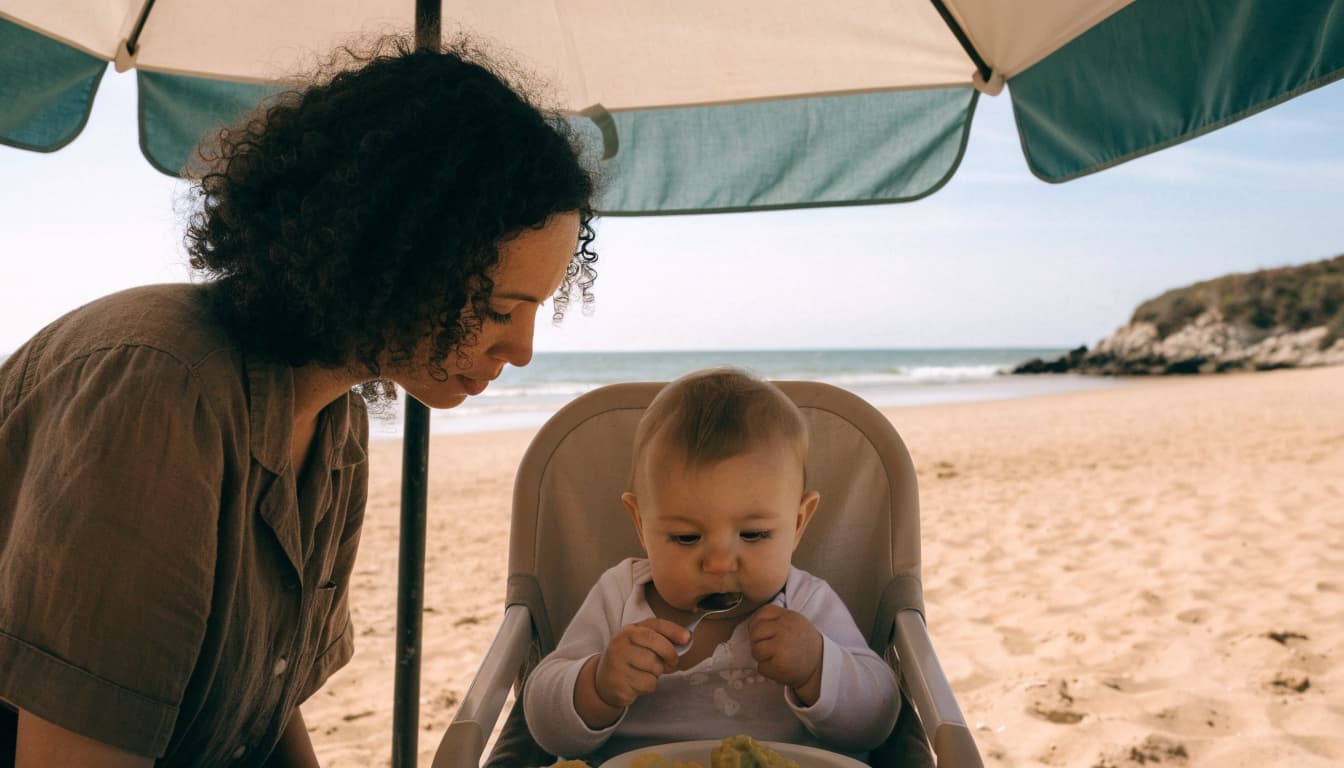
A calm feeding spot helps you see how your baby manages each bite. Set up in shade, wash or clean your hands, and keep a clean spoon and bowl inside a bag until mealtime.
Sit your baby upright and stay close
Use a stable, upright feeding seat suitable for your baby. Stay within arm's reach and supervise the entire meal. Don't offer food while your baby reclines in a stroller, lies on a blanket, or crawls around with a snack.
Pause feeding if your baby becomes upset or wants to play. Eating can wait until they're settled and seated again. An infant choking-response and CPR class can also help you prepare for an emergency before an outing.
Check shape as well as softness
Round or firm foods can be hazardous even when they seem wholesome. Don't serve whole grapes, cherry tomatoes, nuts, popcorn, hard raw vegetables, or thick spoonfuls of nut butter. Avoid large, tough pieces of meat and firm chunks of fruit, too.
Prepare any round foods you do serve in a safe shape for your baby's skills, rather than offering them whole. Thin smooth nut butter into a food your baby already eats instead of serving a sticky lump. Remove pits, bones, tough skins, and seeds before food reaches the bowl.
Pack a Small Feeding Kit You Can Keep Clean
Beach meals get easier when feeding supplies have their own pouch. Take a lidded bowl, two clean spoons, a bib, wipes, and a sealable bag for used items. The second spoon saves you from trying to rescue one that's landed in the sand.
Prepare only what you'll serve
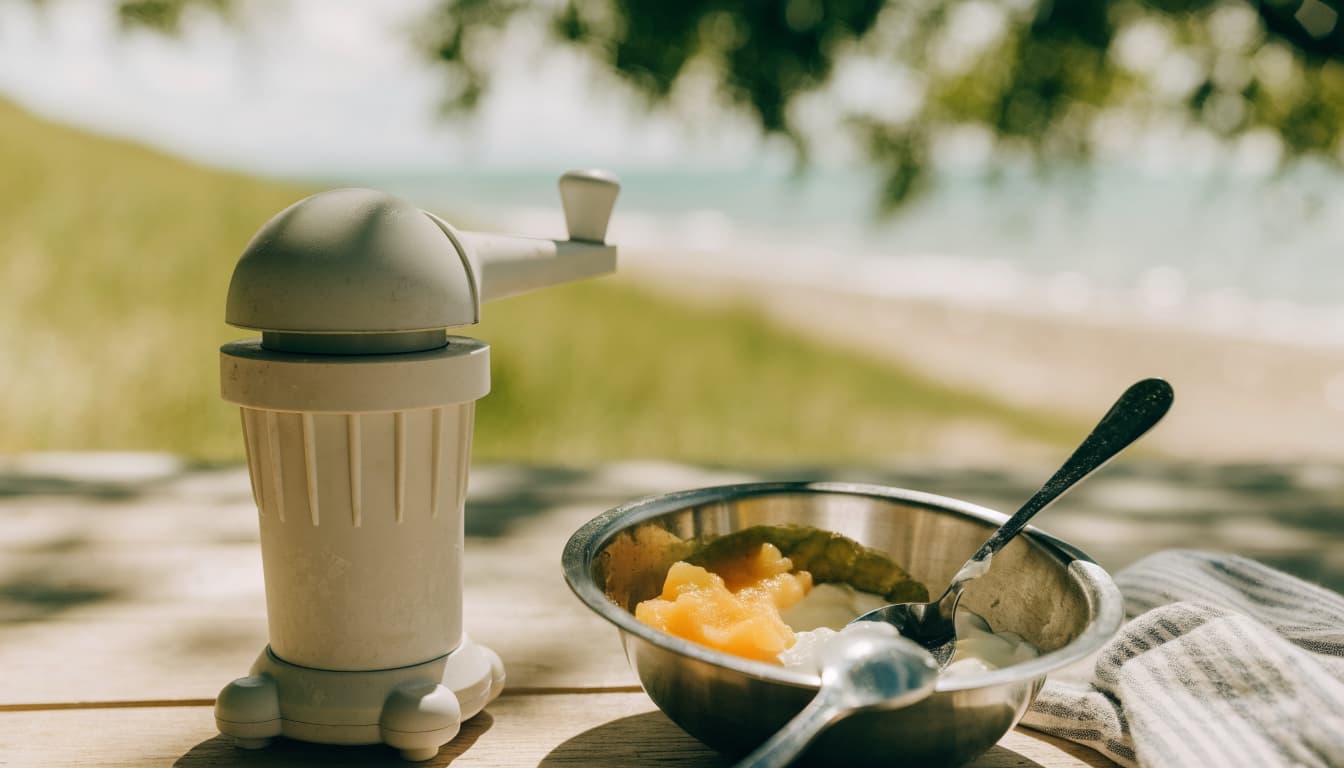
Keep a banana or avocado intact until your baby is ready. For chilled ingredients, take one small container from the cooler and leave the others closed. Use a clean fork or hand-powered food maker to change a soft ingredient's texture.
Set the prepared food on a stable surface away from blowing sand. If a spoon or food falls onto the beach, replace it with a clean one or discard the food. Once you get home, wash reusable tools and containers thoroughly.
Keep the milk routine familiar
Breast milk or infant formula remains an important part of feeding during the first year. Plan those feeds alongside solids rather than expecting a fruit snack to replace one. Follow the appropriate preparation and storage instructions for your baby's milk, especially during a long, hot outing.
Bring more than one clean feeding item if you expect multiple meals. That way, a sandy or used bowl doesn't become your only option when your baby gets hungry again.
Keep New Foods and Extras for Another Day
A beach trip is a poor time to test a new common allergen. Offer new foods at home first, where you can watch your baby and contact your pediatrician if you have concerns. Once a food is familiar, it can join your beach rotation in a texture your baby manages.
Skip honey for babies under 12 months, including honey mixed into other foods. Also leave added salt and sugary snacks out of the meal plan when ordinary foods will do. A banana, soft vegetable, or familiar iron-rich food offers more meal flexibility than a bag of puffs.
If heat, naps, or travel throw off lunch, keep the plan flexible. Offer the usual milk feed and return to solids when you can provide a safe, settled place to eat.
Key Takeaways for Beach Feeding
- Choose familiar foods and prepare them in a texture and shape your baby already manages.
- Keep perishable portions cold, and discard servings that sit out beyond safe time limits.
- Seat your baby upright in shade, stay close, and watch throughout the meal.
- Pack small servings and clean tools so sand and leftovers don't complicate the next feed.
Frequently Asked Questions
Can I pack homemade puree for the beach?
Yes, if you chill it promptly and transport it in a cooler that keeps it at 40°F (4°C) or colder. Pack individual portions so you can take out only what your baby will eat. Discard any puree left in a bowl your baby has eaten from.
Which foods can I prepare when we arrive?
A whole banana or ripe avocado can be opened and mashed at mealtime. Keep your hands, bowl, and tools clean, and serve the food in your baby's usual texture. Cooked foods, yogurt, and cut produce need appropriate cold storage before serving.
What if my baby won't eat at the beach?
Don't force the meal. Sand, noise, heat, or a missed nap can make eating less appealing. Keep up your baby's usual milk feeds, then offer familiar solids when you're in a calm place and your baby is ready.
A Fresh Meal Can Travel With You
A good beach meal begins with food your baby knows, packed for the temperature and served in a safe texture. Small portions make it easier to keep food cold, limit waste, and stay attentive while your baby eats.
The Wonder Wean can help you turn soft, familiar ingredients into fresh baby food away from your kitchen. Its compact, hand-powered design works without electricity, so you can prepare a portion when it's time to eat. If that would simplify your beach feeding kit, you can Buy Now.